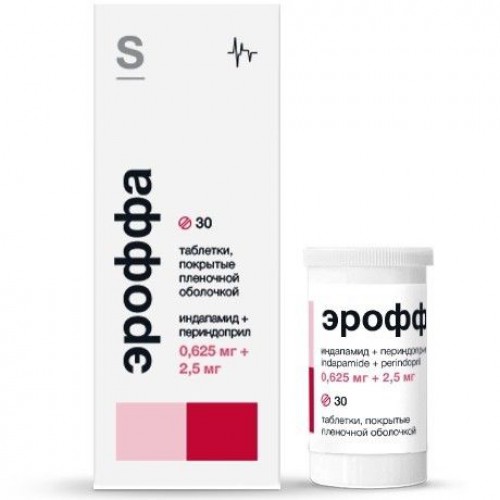
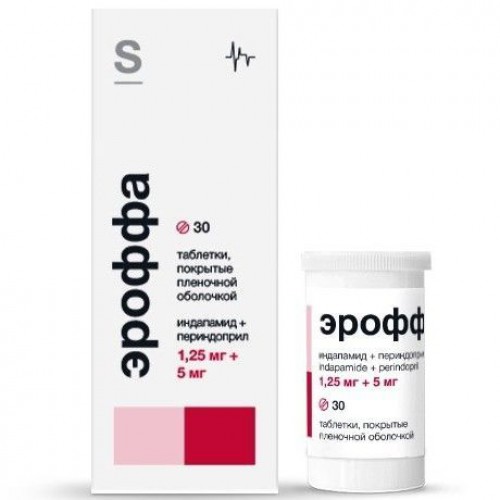
Expiration date: 11/2026
Method of administration and dosage
Always use this medication exactly as directed by your doctor or pharmacist. If in doubt, consult your doctor or pharmacist.
The recommended dose is one tablet per day. Your doctor may change your dosage regimen (for example, if you have impaired kidney function).
Route and (or) method of administration
Orally, preferably in the morning before meals. Swallow the tablet whole with water.
Duration of therapy
Medicines for the treatment of arterial hypertension must be taken continuously.
If you forget to take Eroffa
Continue taking your next dose as usual. Do not take a double dose to make up for a missed dose. It's important to take the medication every day, as regular dosing makes the treatment more effective.
If you stop taking Eroffa
If you stop taking Eroffa without consulting your doctor, your condition may worsen. Because high blood pressure is usually treated on an ongoing basis, do not stop taking Eroffa without first discussing it with your doctor.
If you have any questions about using the drug, please contact your doctor or pharmacist.
Indications
The drug Eroffa is used in adult patients over 18 years of age:
- for the treatment of essential hypertension;
- in patients with arterial hypertension and type 2 diabetes mellitus to reduce the risk of developing microvascular complications (kidney) and macrovascular complications in cardiovascular diseases.
If there is no improvement or you feel worse, you should consult a doctor.
Compound
The active ingredients of the drug are indapamide and perindopril arginine.
Each tablet contains 0.625 or 1.25 mg of indapamide and 2.5 or 5 mg of perindopril arginine. The other (excipients) are: lactose monohydrate, maltodextrin, sodium carboxymethyl starch, magnesium stearate, colloidal silicon dioxide, film coating (polyvinyl alcohol, titanium dioxide, polyethyleneglycol, (macrogol) 3350, talc).
Contraindications
Do not use Eroffa:
- if you are allergic to:
- indapamide or any other sulfonamide;
- perindopril or any other angiotensin-converting enzyme inhibitor;
- any other components of this drug (listed in section 6 of the package leaflet);
- if you have previously developed symptoms such as wheezing, swelling of the face or tongue (angioedema), intense itching or a severe skin rash while taking other angiotensin-converting enzyme inhibitors, or if one of your relatives has had such symptoms under any circumstances;
- if you are taking a blood pressure medicine containing aliskiren and you have diabetes or kidney problems;
- if you have kidney problems related to diabetes and are taking angiotensin II receptor blockers;
- if you have severe liver disease or hepatic encephalopathy (a potentially reversible disorder of brain function resulting from liver failure);
- if you have severe kidney disease, which may include reduced blood flow to the kidneys (renal artery stenosis);
- if you are undergoing dialysis or any other type of blood filtration. Depending on the equipment used, Eroffa may not be suitable for you;
- if you have low levels of potassium in your blood;
- if you have severe water retention in the body, difficulty breathing (suspected untreated decompensated heart failure);
- if you are taking medications that can cause changes in heart rhythm (see the subsection “Other medications and Eroffa”);
- if you are pregnant or planning a pregnancy (see the subsection “Pregnancy and breastfeeding”);
- if you are breastfeeding (see the subsection “Pregnancy and breastfeeding”);
- if you are taking the combination of valsartan + sacubitril, a drug used to treat heart failure (see the subsections “Special warnings and precautions” and “Other drugs and Eroffa”).
If you think any of the above applies to you, please tell your doctor.
Special instructions
Before taking Eroffa, consult your doctor or pharmacist:
- if you have a narrowing of the main blood vessel leaving your heart (aortic stenosis), a disease of the heart muscle (hypertrophic cardiomyopathy), or a narrowing of the artery that supplies blood to your kidneys (renal artery stenosis);
- if you have heart failure or other heart disease;
- if you have kidney disease or are undergoing dialysis;
- if you have muscle disorders, including muscle pain, soreness, weakness or muscle spasms;
- if you have an abnormally high concentration of the hormone aldosterone in your blood (primary hyperaldosteronism);
- if you have liver problems;
- if you have a connective tissue disease (a group of diseases characterized by damage to connective tissue), such as systemic lupus erythematosus or scleroderma;
- if you have the formation of atherosclerotic plaques in the walls of the arteries, narrowing their lumen (atherosclerosis);
- if you have increased function of the parathyroid glands (hyperparathyroidism);
- if you have gout (patients with hyperuricemia);
- if you have elevated levels of potassium in your plasma (hyperkalemia);
- if you have low plasma sodium levels (hyponatremia);
- if you have diabetes;
- if you are on a low-salt diet or taking salt substitutes containing potassium;
- if you are taking lithium or potassium-sparing drugs (spironolactone, triamterene) or potassium supplements, as you should not take them at the same time as Eroffa (see the section “Other drugs and Eroffa”);
- if you are taking allopurinol, cancer drugs (cytostatics) or immunosuppressants, or are receiving procainamide therapy (a drug used to treat heart rhythm disorders);
- if you are receiving therapy with gold preparations; taking non-steroidal anti-inflammatory drugs; baclofen; corticosteroids; neprilysin inhibitors; drugs that can cause prolongation of the QT interval on the electrocardiogram; cardiac glycosides; drugs that can cause life-threatening heart rhythm disturbances (polymorphic ventricular tachycardia of the "torsades de pointes" type);
- if you have been diagnosed with bone marrow suppression;
- if you are an elderly person;
- if you have cerebrovascular disease;
- if you have renovascular hypertension;
- if you have an unstable increase in blood pressure (labile blood pressure numbers);
- if you have increased skin sensitivity to the sun (photosensitivity);
- if you experience decreased vision or eye pain. These may be symptoms of fluid buildup in the vascular layer of the eye (choroidal effusion) or increased pressure in the eye, which can occur within a few hours or weeks after taking Eroffa. If left untreated, this can lead to permanent vision loss;
- if you have previously had an allergy to penicillin or sulfonamides, you may have an increased risk of developing one;
- if you have had a serious allergic reaction with swelling of the face, lips, mouth, tongue, and throat, which may be accompanied by difficulty swallowing or breathing (angioedema). This can occur at any time during treatment. If you develop such symptoms, you should stop treatment and consult a doctor immediately.
- if you are taking any of the following medications used to treat high blood pressure:
- angiotensin II receptor blockers (also known as sartans, such as valsartan, irbesartan, telmisartan), especially if you have diabetes-related kidney problems;
- aliskiren.
Your doctor may regularly monitor your kidney function, blood pressure, and electrolyte levels (such as potassium) in your blood.
See also the information provided in the subsection "Contraindications".
- if you are of black race, as you may be at higher risk of developing angioedema, and Eroffa may be less effective in lowering blood pressure than patients of other races;
- if you are undergoing dialysis with highly permeable membranes;
- If you take any of the following medications, your risk of developing angioedema may increase:
- racecadotril (used to treat diarrhea);
- sirolimus, everolimus, temsirolimus and other drugs belonging to the class of so-called mTOR inhibitors (used to prevent rejection of transplanted organs);
- sacubitril (available in fixed combination with valsartan), used to treat chronic heart failure;
- linagliptin, saxagliptin, sitagliptin, vildagliptin and other drugs belonging to the class of so-called gliptins (used to treat diabetes mellitus).
Angioedema
Cases of serious allergic reactions involving swelling of the face, lips, tongue, or throat, and difficulty swallowing or breathing (angioedema) have been reported in patients taking angiotensin-converting enzyme inhibitors, including Eroffa. These reactions can occur at any time during therapy. If you experience these symptoms, stop taking Eroffa immediately and consult a doctor (see section 4 of the package insert).
You should tell your doctor if you think you are pregnant (or planning to become pregnant).
(become pregnant). Eroffa should not be taken during pregnancy, as it may cause serious harm to the baby (see the section "Pregnancy and breastfeeding").
Also tell your doctor or nurse that you are taking Eroffa:
- if you are going to have anesthesia and/or major surgery;
- if you have recently experienced diarrhea, vomiting or dehydration;
- if you need to undergo hardware removal of cholesterol from the blood (dialysis or low-density lipoprotein apheresis);
- if you are undergoing desensitization, which should reduce allergic reactions to bee or wasp stings;
- if you are undergoing a medical examination that requires the administration of a substance that makes it possible to examine internal organs, such as the kidneys or stomach, using X-rays (iodine-containing radiocontrast agent);
If you experience vision changes or pain in one or both eyes while taking Eroffa. This may be a sign of developing glaucoma or increased pressure in the eye(s). You should stop taking Eroffa and consult a doctor.
Athletes should be aware that Eroffa contains an active substance (indapamide) that may cause a positive reaction during doping tests.
Children and teenagers
Do not give this medication to children aged 0 to 18 years, as the safety and effectiveness of Eroffa in children and adolescents have not been established. No data are available.
Eroffa contains lactose monohydrate.
If you have an intolerance to some types of sugars, consult your doctor before taking this medicine.
Eroffa contains sodium.
This medicine contains less than 1 mmol (23 mg) sodium per tablet, making it essentially sodium-free.
Packaging and release form
Film-coated tablets, 1.25 mg + 5 mg - 30 pcs per pack, together with the package insert, are placed in a cardboard box.
Side effects
Like all medicines, Eroffa can cause side effects, although not everybody gets them.
Stop taking Eroffa and call your doctor immediately if you experience one or more of the following serious side effects:
- severe dizziness or loss of consciousness caused by low blood pressure (common - may occur in no more than 1 in 10 people);
- a feeling of tightness in the chest, wheezing and shortness of breath (bronchospasm) (uncommon - may occur in no more than 1 person in 100);
- swelling of the face, lips, mouth, tongue or throat, difficulty breathing (angioedema) (see section 2 of the leaflet) (uncommon - may occur no more often than
- 1 person out of 100);
- severe skin reactions including skin rash, often starting with red itchy areas on the face, arms or legs (erythema multiforme) or intense skin rash, hives, reddening of the skin over the entire body, severe itching, blistering, peeling and swelling of the skin, inflammation of the mucous membranes (Stevens-Johnson syndrome, toxic epidermal necrolysis) or other allergic reactions (very rare - may affect up to 1 in 10,000 people);
- heart problems (irregular heartbeat (including slow or fast heartbeat); chest, jaw, and back pain caused by exercise (angina); heart attack (myocardial infarction)) (very rare - may affect up to 1 in 10,000 people);
- weakness in the arms or legs, problems with speech, which may be signs of a stroke (very rare - may occur no more than 1 in 10,000 people);
- inflammation of the pancreas (pancreatitis), which can cause severe abdominal and back pain, accompanied by poor health (very rare - may occur in no more than 1 person in 10,000);
- yellowing of the skin or whites of the eyes (jaundice), which may be a sign of hepatitis (very rare - may occur in no more than 1 person in 10,000);
- life-threatening change in heart rhythm (polymorphic ventricular tachycardia of the "pirouette" type) (frequency unknown - cannot be estimated based on the available data);
- a brain disease caused by impaired liver function (hepatic encephalopathy) (frequency unknown - cannot be estimated from the available data);
- visual impairment (choroidal effusion with visual field defect, acute myopia (sudden onset or worsening nearsightedness), acute attack of secondary angle-closure glaucoma (acute increase in intraocular pressure)). This may present as a sudden decrease in visual acuity or eye pain (frequency unknown - cannot be estimated from the available data);
- muscle weakness, cramping, soreness or pain in the muscles, especially if accompanied by unwellness or fever, as this may be caused by abnormal breakdown of muscle cells (rhabdomyolysis) (frequency unknown - cannot be estimated from the available data).
If you have any concerns, please contact your doctor or pharmacist. Do not stop taking Eroffa without first consulting your doctor.
When using the drug Eroffa, adverse reactions may be observed with the following frequency:
Common (may occur in up to 1 in 10 people)
- low potassium levels in the blood (hypokalemia), skin reactions in patients predisposed to allergic and asthmatic reactions, headache, dizziness, spinning sensation, tingling sensation in the extremities (paresthesia), visual impairment, ringing in the ears (tinnitus), cough, shortness of breath, gastrointestinal disorders (nausea, vomiting, abdominal pain, taste disturbances (dysgeusia), dyspepsia or indigestion, diarrhea, constipation), allergic reactions (such as skin rash, itching), muscle spasms, feeling of fatigue (asthenia).
Uncommon (may occur in less than 1 in 100 people)
- mood swings (mood lability), depression, sleep disturbances, hives, red pinpoint spots on the skin (purpura), blistering of the skin (pemphigoid), impaired kidney function (renal failure), erectile dysfunction (impotence), sweating (increased sweating), increased eosinophils (a type of white blood cell), changes in laboratory tests: high potassium levels in the blood (hyperkalemia), which decreases after stopping the drug, low sodium levels (hyponatremia); drowsiness, fainting (loss of consciousness), awareness of your own heart beating (palpitations), increased heart rate (tachycardia), very low blood sugar (hypoglycemia) in patients with diabetes, inflammation of the blood vessels (vasculitis), dry mouth, increased sensitivity of the skin to the sun (photosensitivity), joint pain (arthralgia), muscle pain (myalgia), chest pain, malaise, peripheral oedema, fever, increased blood urea and creatinine levels, loss of balance followed by a fall.
Rare (may occur in less than 1 in 1,000 people)
- worsening of the course (exacerbation) of psoriasis; changes in laboratory parameters: low levels of chlorine in the blood (hypochloremia), low levels of magnesium in the blood (hypomagnesemia), increased activity of liver enzymes, increased concentration of bilirubin in the blood (hyperbilirubinemia), increased fatigue, hot flashes (reddening of the skin), decreased or absent urination, acute renal failure.
Dark urine, nausea or vomiting, muscle cramps, confusion, and seizures can be symptoms of a condition called syndrome of inappropriate antidiuretic hormone secretion (SIADH).
Very rare (may occur in less than 1 in 10,000 people)
- confusion, a rare type of pneumonia (eosinophilic pneumonia), nasal congestion or runny nose (rhinitis), severe kidney problems (acute renal failure); blood disorders such as a decrease in the number of white blood cells and red blood cells: agranulocytosis, aplastic anemia, pancytopenia, leukopenia, neutropenia, hemolytic anemia, decreased hemoglobin and hematocrit, decreased platelet count (thrombocytopenia), high levels of calcium in the blood (hypercalcemia), impaired liver function.
Frequency unknown (cannot be estimated from the available data)
- abnormalities in the electrocardiogram (prolongation of the QT interval), changes in laboratory parameters: decreased potassium levels with hypokalemia (low potassium in the blood), increased uric acid and glucose levels in the blood; nearsightedness (myopia), blurred vision, visual impairment, numbness and pain in the fingers and toes (Raynaud's phenomenon). If you have systemic lupus erythematosus (a type of connective tissue disease), your condition may worsen.
Blood, kidney, liver, or pancreatic problems and changes in laboratory parameters (blood tests) may occur. Your doctor may order blood tests to monitor your condition.
Reporting adverse reactions
If you experience any adverse reactions, consult your doctor.
This recommendation applies to any possible adverse reactions, including those not listed in the package leaflet. You can report adverse reactions directly (see below). By reporting adverse reactions, you help provide more information about the safety of this medicine.
Pharmacotherapeutic group
agents acting on the renin-angiotensin system; angiotensin-converting enzyme (ACE) inhibitors, combinations; ACE inhibitors and diuretics
Interaction with other drugs
Tell your doctor or pharmacist if you are taking, have recently taken, or might take any other medicines.
Avoid taking Eroffa concomitantly with the following medications:
- lithium preparations (used to treat mania or depression);
- aliskiren (a drug used to treat high blood pressure), unless you have diabetes or kidney problems;
- potassium-sparing diuretics (eg, triamterene, spironolactone, amiloride), potassium salts, and other drugs that can increase potassium levels in the body (eg, heparin and co-trimoxazole, also known as sulfamethoxazole + trimethoprim);
- estramustine (used in the treatment of cancer);
- other drugs for the treatment of high blood pressure: angiotensin-converting enzyme inhibitors and angiotensin II receptor blockers.
Treatment with Eroffa may be affected by other medications.
Your doctor may change your dose and/or take other precautions.
Also tell your doctor if you are taking or plan to take any of the following medications:
- drugs used to treat high blood pressure, including angiotensin II receptor blockers or aliskiren (see also the information provided in the subsections “Contraindications” and “Special warnings and precautions”), or diuretics (drugs that increase the amount of urine excreted by the kidneys);
- potassium-sparing drugs used in the treatment of heart failure: eplerenone and spironolactone in doses from 12.5 to 50 mg/day;
- drugs that are most often used to treat diarrhea (racecadotril) or to prevent rejection of transplanted organs (sirolimus, everolimus, temsirolimus and other drugs belonging to the class of so-called mTOR inhibitors) (see subsection “Special warnings and precautions”);
- a combination of valsartan + sacubitril (used to treat chronic heart failure) (see subsections “Contraindications” and “Special instructions and precautions”);
- propofol, sevoflurane (drugs for anesthesia);
- iodine-containing radiocontrast agents;
- levofloxacin, moxifloxacin, sparfloxacin, ciprofloxacin, erythromycin intravenously, azithromycin, clarithromycin, roxithromycin, spiramycin, co-trimoxazole (antibiotics used to treat infections);
- allopurinol (for the treatment of gout);
- mizolastine, terfenadine, or astemizole (antihistamines used to treat hay fever or allergies);
- corticosteroids, which are used to treat various diseases, including severe bronchial asthma and rheumatoid arthritis;
- immunosuppressants that are used to treat autoimmune disorders or after transplant operations to prevent rejection (for example, cyclosporine, tacrolimus);
- halofantrine, lumefantrine, mefloquine, quinine, chlorophyll (used to treat some types of malaria);
- pentamidine (used to treat pneumonia);
- sodium aurothiomalate (an injectable gold preparation used to treat rheumatoid arthritis);
- vincamine (used for the symptomatic treatment of cognitive impairment in elderly patients, including memory loss);
- bepridil, ranolazine (used to treat angina);
- voriconazole, itraconazole, ketoconazole, fluconazole (antifungal agents);
- vandetanib, arsenic trioxide, oxaliplatin, tacrolimus, anagrelide (antineoplastic drugs and immunomodulators);
- ondansetron (antiemetic);
- alteplase (thrombolytics, drugs used to act on blood clots);
- drugs prescribed for the treatment of heart rhythm disorders (for example, quinidine, hydroquinidine, procainamide, disopyramide, flecainide, amiodarone, sotalol, dofetilide, ibutilide, bretylium tosylate, dronedarone);
- cisapride, diphemanil, domperidone (used to treat gastrointestinal disorders);
- digoxin or other cardiac glycosides (for the treatment of heart disease);
- baclofen (for the treatment of muscle stiffness that occurs in diseases such as multiple sclerosis);
- drugs for the treatment of diabetes mellitus, such as insulin, metformin or gliptins (linagliptin, saxagliptin, sitagliptin, vildagliptin);
- calcium, including calcium supplements;
- stimulant laxatives (eg senna);
- nonsteroidal anti-inflammatory drugs (eg, ibuprofen) or high doses of salicylates (eg, acetylsalicylic acid);
- amphotericin B in injectable form (for the treatment of serious fungal diseases);
- drugs for the treatment of mental disorders such as depression, anxiety, schizophrenia and others (e.g. tricyclic antidepressants; selective serotonin reuptake inhibitors such as citalopram, escitalopram; neuroleptics for the treatment of psychosis such as chlorpromazine, cyamemazine, levomepromazine, thioridazine, trifluoperazine, fluphenazine, amisulpride, sulpiride, sultopride, tiapride, haloperidol, droperidol, pimozide, sertindole);
- tetracosactide (for the treatment of Crohn's disease);
- trimethoprim (for the treatment of infections);
- vasodilators, including nitrates (drugs that cause dilation of blood vessels);
- vasopressin (a drug for the treatment of diabetes insipidus);
- terlipressin (a drug for the treatment of bleeding from the gastrointestinal tract, urinary and reproductive systems);
- ketanserin, nitroglycerin (vasodilator);
- probucol (lipid-lowering agent);
- terodiline (antispasmodic);
- cilostazol (a drug for the treatment of intermittent claudication);
- drugs that are used to treat low blood pressure, shock or asthma (eg, ephedrine, norepinephrine or adrenaline).
Impact on the ability to drive a car and operate other machinery
Eroffa does not affect reaction time, but some patients may experience various reactions due to low blood pressure, such as dizziness or weakness. As a result, the ability to drive vehicles or operate machinery may be impaired. In this case, avoid driving.
Use during pregnancy and breastfeeding
If you are pregnant, think you may be pregnant, or are planning a pregnancy, talk to your doctor or pharmacist before taking Eroffa.
Pregnancy
You should inform your doctor if you think you are pregnant (or may become pregnant). Your doctor will generally advise you to stop taking Eroffa before you become pregnant or as soon as you learn you are pregnant. Your doctor will recommend taking another medication instead of Eroffa. Eroffa is contraindicated during pregnancy because it can cause serious harm to the baby.
Breast-feeding
You should not take Eroff if you are breastfeeding.
Tell your doctor immediately if you are breastfeeding or plan to breastfeed.
Contact your healthcare provider immediately.
Pharmacodynamics
What is Eroffa and what is it used for?
Eroffa contains two active ingredients: indapamide and perindopril arginine. This medication belongs to a class of drugs called agents that act on the renin-angiotensin system, angiotensin-converting enzyme (ACE) inhibitors in combination with diuretics.
Indapamide is a diuretic and lowers blood pressure. Unlike other diuretics, indapamide, when taken at recommended doses, slightly increases urine output. Furthermore, indapamide increases the distensibility (elasticity) of large arteries and reduces the resistance of small peripheral arteries, which also helps lower blood pressure.
Perindopril belongs to a class of drugs called angiotensin-converting enzyme inhibitors. Its action leads to dilation of blood vessels, reduction of peripheral arterial resistance, improvement of cardiac muscle (myocardial) function, and reduction of cardiac workload.
Concomitant administration of indapamide and perindopril arginine enhances the effect of each on blood pressure.
Storage temperature
from 2℃ to 30℃
Dosage form
The tablets are oblong, biconvex, scored on one side, film-coated, white or almost white.
The break line (score) is not intended to be used for breaking the tablet.
Overdose
If you took more Eroffa than you should
If you take more Eroffa than you should, immediately notify your doctor or call the nearest emergency room. The most likely symptom of an overdose is a drop in blood pressure. If you experience a sudden drop in blood pressure (a condition accompanied by nausea, vomiting, seizures, dizziness, drowsiness, confusion, or changes in the amount of urine excreted by the kidneys), lie down and elevate your legs. This may improve your condition.