
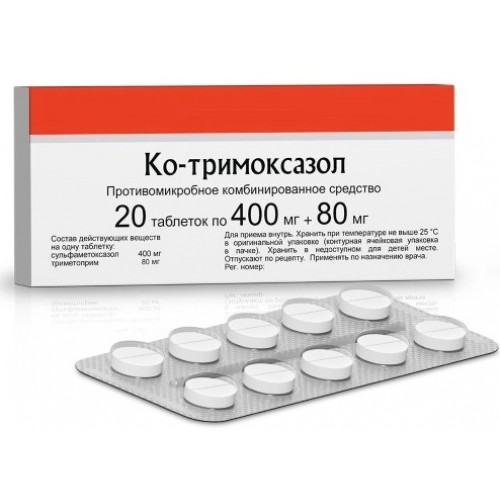
Expiration date: 11/2028
Dosage form
The tablets are white with a creamy tint, round, flat-cylindrical. Marbling is permitted on the tablet surface.
Compound
Composition per tablet:
active ingredients: sulfamethoxazole - 400.0 mg, trimethoprim - 80.0 mg,
Excipients: potato starch - 98.0 mg, povidone (polyvinylpyrrolidone, povidone K-17) - 5.5 mg, croscarmellose
sodium - 12.0 mg, calcium stearate - 4.5 mg.
Pharmacotherapeutic group
combined antimicrobial agent
Pharmacodynamics
A combination antimicrobial drug consisting of sulfamethoxazole and trimethoprim. Sulfamethoxazole, similar in structure to para-aminobenzoic acid, disrupts the synthesis of dihydrofolic acid in bacterial cells by preventing the incorporation of para-aminobenzoic acid into its molecule. Trimethoprim enhances the action of sulfamethoxazole by disrupting the reduction of dihydrofolic acid to tetrahydrofolic acid, the active form of folic acid responsible for protein metabolism and microbial cell division.
It is a broad-spectrum bactericidal drug, active against the following microorganisms: Streptococcus spp. (hemolytic strains are more sensitive to penicillin), Staphylococcus spp., Streptococcus pneumoniae, Neisseria meningitidis, Neisseria gonorrhoeae, Escherichia coli (including enterotoxigenic strains), Salmonella spp. (including Salmonella typhi and Salmonella paratyphi), Vibrio cholerae, Bacillus anthracis, Haemophilus influenzae (including ampicillin-resistant strains), Listeria spp., Nocardia asteroides, Bordetella pertussis, Enterococcus faecalis, Klebsiella spp., Proteus spp., Pasteurella spp., Francisella tularensis, Brucella spp., Mycobacterium spp. (including Mycobacterium leprae), Citrobacter, Enterobacter spp., Legionella pneumophila, Providencia, some species of Pseudomonas (except Pseudomonas aeruginosa), Serratia marcescens, Shigella spp., Yersinia spp., Morganella spp., Pneumocystis carinii; Chlamydia spp. (including Chlamydia trachomatis, Chlamydia psittaci); protozoa: Plasmodium spp., Toxoplasma gondii, pathogenic fungi, Actinomyces israelii, Coccidioides immitis, Histoplasma capsulatum, Leishmania spp.
Resistant to the drug: Corynebacterium spp., Pseudomonas aeruginosa, Mycobacterium tuberculosis, Treponema spp., Leptospira spp., viruses.
It inhibits the activity of E. coli, which leads to decreased synthesis of thiamine, riboflavin, niacin, and other B vitamins in the intestine. The therapeutic effect lasts for 7 hours.
Pharmacokinetics
With oral administration, absorption is 90%. The time to reach maximum plasma concentration is 1-4 hours, with therapeutic concentrations maintained for 7 hours after a single dose. It is well distributed throughout the body. It penetrates the blood-brain barrier, the placental barrier, and breast milk. Concentrations in the lungs and urine exceed those in plasma. It accumulates to a lesser extent in bronchial secretions, vaginal discharge, prostate secretions and tissue, middle ear fluid (during inflammation), cerebrospinal fluid, bile, bones, saliva, aqueous humor of the eye, breast milk, and interstitial fluid. Plasma protein binding is 66% for sulfamethoxazole and 45% for trimethoprim.
Both components are metabolized to form acetylated derivatives, sulfamethoxazole to a greater extent. The metabolites do not exhibit antimicrobial activity.
It is excreted by the kidneys in the form of metabolites (80% within 72 hours) and unchanged (20% sulfamethoxazole, 50% trimethoprim); a small amount is excreted through the intestines. The half-life of sulfamethoxazole is 9-11 hours, trimethoprim - 10-12 hours,
For children - significantly less and depends on age: up to 1 year - 7-8 hours, 1-10 years - 5-6 hours. In elderly patients and patients with impaired renal function, the half-life of the drug increases.
Indications
- Infections of the genitourinary system: urethritis, cystitis, pyelitis, pyelonephritis, prostatitis, epididymitis, gonorrhea, chancroid, lymphogranuloma venereum, granuloma inguinale;
- respiratory tract infections: bronchitis (acute and chronic), bronchiectasis, lobar pneumonia, bronchopneumonia, pneumocystis pneumonia;
- ENT infections: otitis media, sinusitis, laryngitis, tonsillitis; scarlet fever; gastrointestinal tract infections: typhoid fever, paratyphoid fever, salmonella carriage, cholera, dysentery, cholecystitis, cholangitis, gastroenteritis caused by enterotoxic strains of Escherichia coli;
- skin and soft tissue infections: acne, furunculosis, pyoderma, wound infections;
- osteomyelitis (acute and chronic) and other osteoarticular infections, brucellosis (acute), South American blastomycosis, malaria (Plasmodium falciparum), toxoplasmosis (as part of complex therapy).
Contraindications
Hypersensitivity to co-trimoxazole, trimethoprim, sulfonamides or any of the excipients, pregnancy, breast-feeding, children under 6 years of age (for this dosage form), established diagnosis of liver parenchyma damage, severe renal failure if it is not possible to determine the concentration of the drug in blood plasma (use is not recommended with creatinine clearance below 15 ml / min), severe hematological diseases (aplastic anemia, B12-deficiency anemia, agranulocytosis, leukopenia, megaloblastic anemia, hyperbilirubinemia in children associated with folate deficiency), glucose-6-phosphate dehydrogenase deficiency (risk of hemolysis); concomitant administration with dofetilide, paclitaxel and amiodarone; concomitant use with clozapine should be avoided since the latter is known to cause aganulocytosis.
With caution
Folic acid deficiency, bronchial asthma, thyroid disease.
Use during pregnancy and breastfeeding
Since the safety of co-trimoxazole in pregnant women has not been established, the use of the drug during pregnancy is contraindicated.
It is known that trimethoprim and sulfamethoxazole penetrate into breast milk, therefore, if it is necessary to use the drug during breastfeeding, the issue of stopping breastfeeding should be decided.
Method of administration and dosage
The medication is taken during or after meals. It is recommended to take it with an alkaline drink (milk, mineral water).
The dosage regimen is individual depending on the severity of the disease, sensitivity and type of pathogen, and the age of the patient.
Children 6 to 12 years old: 1 tablet (480 mg) 2 times a day.
Adults and children over 12 years of age: 2 tablets (960 mg) once or 1 tablet (480 mg) 2 times daily. For severe infections: 1 tablet (480 mg) 3 times daily; for chronic infections: 1 tablet (480 mg) 2 times daily.
For uncomplicated infections, the following is prescribed: children over 12 years of age and adults: 1 tablet 2 times a day.
The course of treatment lasts from 5 to 14 days. For severe and/or chronic infectious diseases, a single dose increase of 30-50% is permissible.
Side effects
From the nervous system: headache, dizziness, vertigo, convulsions, ataxia, paresthesia, tinnitus, uveitis, hallucinations, nervousness; aseptic meningitis, depression, apathy, tremor, peripheral neuritis.
From the respiratory system, chest organs and mediastinum: bronchospasm, pulmonary infiltrates: eosinophilic infiltrate, allergic alveolitis (cough, shortness of breath).
From the gastrointestinal tract: nausea, vomiting, decreased appetite, diarrhea, gastritis, abdominal pain, glossitis, stomatitis, cholestasis, increased activity of "liver" transaminases, hepatitis including cholestatic, hepatonecrosis, pseudomembranous colitis, "vanishing bile duct" syndrome (ductopenia), hyperbilirubinemia, acute pancreatitis.
From the blood and lymphatic system: leukopenia, neutropenia, thrombocytopenia, agranulocytosis, anemia (megaloblastic, hemolytic/autoimmune or aplastic), methemoglobinemia, eosinophilia, hypoprothrombinemia.
From the kidneys and urinary tract: polyuria, interstitial nephritis, impaired renal function, crystalluria, hematuria, increased urea concentration, hypercreatininemia, toxic nephropathy with oliguria and anuria.
From the musculoskeletal system: arthralgia, myalgia, rhabdomyolysis.
From the immune system: itching, photosensitivity, rash, erythema multiforme exudative (including Stevens-Johnson syndrome), toxic epidermal necrolysis (Lyell's syndrome), exfoliative dermatitis, allergic myocarditis, increased body temperature, angioedema, hyperemia of the sclera, urticaria, hyperemia of the conjunctiva, anaphylactic/anaphylactoid reactions, serum sickness, hemorrhagic vasculitis (Schonlein-Henoch purpura), periarteritis nodosa, lupus-like syndrome, drug rash with eosinophilia and systemic symptoms (DRESS syndrome).
Others: hypoglycemia, hyperkalemia (mainly in AIDS patients during treatment of Pneumocystis pneumonia), hyponatremia, weakness, fatigue, insomnia, candidiasis.
Overdose
Symptoms: nausea, vomiting, intestinal colic, dizziness, headache, drowsiness, depression, fainting, confusion, visual impairment, fever, hematuria, crystalluria; with prolonged overdose - thrombocytopenia, leukopenia, megaloblastic anemia, jaundice.
Treatment: Gastric lavage; acidifying the urine increases trimethoprim excretion. Oral fluid intake; intramuscular administration of 5-15 mg/day of calcium folinate (reduces the effect of trimethoprim on bone marrow); hemodialysis if necessary.
Drug interactions
Enhances the anticoagulant activity of indirect anticoagulants, as well as the effect of hypoglycemic drugs and methotrexate. Reduces the intensity of hepatic metabolism of phenytoin (prolongs its half-life by 39%) and warfarin, enhancing their effect. Reduces the reliability of oral contraception (suppresses intestinal microflora and reduces enterohepatic circulation of hormonal compounds). Rifampicin shortens the half-life of trimethoprim. Pyrimethamine in doses exceeding 25 mg/week increases the risk of megaloblastic anemia. Diuretics (usually thiazides) increase the risk of thrombocytopenia. Benzocaine, procaine, procainamide (and other drugs that hydrolyze to form para-aminobenzoic acid) reduce the effect. A cross-allergic reaction may occur between diuretics (thiazides, furosemide, etc.) and oral hypoglycemic agents (sulfonylureas) and antimicrobial sulfonamides. Phenytoin, barbiturates, and para-aminobenzoic acid increase the manifestations of folate deficiency. Salicylic acid derivatives enhance the effect. Ascorbic acid, hexamethylenetetramine (and other drugs that acidify urine) increase the risk of crystalluria. Cholestyramine reduces absorption and should therefore be taken 1 hour after or 4-6 hours before co-trimoxazole. Drugs that suppress bone marrow hematopoiesis increase the risk of myelosuppression.
Special instructions
Co-trimoxazole should only be initiated when the benefit of this combination therapy over other antibacterial single-agent regimens outweighs the potential risk. Since bacterial susceptibility to antibacterial agents in vitro varies geographically and over time, local bacterial susceptibility patterns should be considered when selecting a drug.
Hypersensitivity and allergic reactions: At the first appearance of a skin rash or any other severe adverse reaction, discontinue use. Co-trimoxazole should be used with caution in patients with a predisposition to allergic reactions and bronchial asthma.
Pulmonary infiltrates (eosinophilic or allergic alveolitis) may present with symptoms such as cough or shortness of breath. If these symptoms appear or worsen suddenly, the patient should be re-evaluated and discontinuation of treatment should be considered.
Renal impairment: Sulfonamides, including co-trimoxazole, may increase diuresis, especially in patients with edema due to heart failure. Careful monitoring of renal function and serum potassium levels is necessary in patients receiving high doses of co-trimoxazole (including during the treatment of Pneumocystis pneumonia caused by P. jirovecii), as well as in the following groups of patients: patients with a history of impaired potassium metabolism who are receiving standard doses of co-trimoxazole; patients with renal insufficiency; patients receiving drugs that promote the development of hyperkalemia.
Serious adverse reactions: Fatalities, although rare, have been reported in association with adverse reactions such as blood abnormalities, Stevens-Johnson syndrome, toxic epidermal necrolysis (Lyell's syndrome), drug rash with eosinophilia and systemic symptoms (DRESS syndrome), and fulminant hepatic necrosis.
Special patient groups: Elderly and geriatric patients, as well as patients with underlying medical conditions such as renal and/or hepatic impairment, or those taking other medications concomitantly, are at increased risk of severe adverse reactions. In these cases, the risk is related to the dose and duration of therapy.
The duration of treatment with this drug should be as short as possible, especially in elderly or geriatric patients. In cases of renal impairment, the dosage should be adjusted according to the instructions in the "Dosage and Administration" section. Patients with severe renal impairment (creatinine clearance 15-30 mg/min) receiving trimethoprim-sulfamethoxazole should be closely monitored for the development of toxicity symptoms (nausea, vomiting, hyperkalemia).
Co-trimoxazole should only be prescribed to patients with severe hematological complications as an exceptional measure. Elderly and geriatric patients, as well as those with pre-existing folate deficiency or renal failure, may experience hematological changes characteristic of folate deficiency. These changes resolve with the administration of folic acid.
Due to the possibility of hemodialysis, Co-trimoxazole should not be prescribed to patients with glucose-6-phosphate dehydrogenase deficiency, unless there are absolute indications and only in minimal doses.
As with any sulfonamide, caution should be exercised in patients with porphyria or thyroid dysfunction.
Patients with a "slow acetylation" metabolism are more prone to developing idiosyncrasy to sulfonamides.
Long-term therapy: When co-trimoxazole is used long-term, blood counts should be monitored regularly. If any blood cell counts decrease significantly, the drug should be discontinued.
Patients receiving long-term treatment with co-trimoxazole (especially those with renal insufficiency) should have regular urinalysis and renal function monitoring. During treatment, ensure adequate fluid intake and diuresis to prevent crystalluria.
Effects on laboratory test results: Trimethoprim may interfere with serum methotrexate determinations using the enzymatic method, but does not affect the results of the radioimmunoassay method. Co-trimoxazole may increase the results of the Jaffe-picric acid test for creatinine quantification by 10%.
Impact on the ability to drive vehicles and operate machinery
During the treatment period, caution should be exercised when driving vehicles and engaging in other potentially hazardous activities that require increased concentration and quick psychomotor reactions.
The potential for developing side effects from the nervous system, such as dizziness, vertigo, seizures, and hallucinations, should be taken into account.
If the described side effects occur, you should refrain from performing the specified activities.
Storage temperature
from 2℃ to 25℃
Co-trimoxazole
(Sulfamethoxazole
+
Trimethoprim)
400mg+80mg
20
tablets
- Brand: Pharmstandart

out of stock