Expiration date: 02/2029
Release form
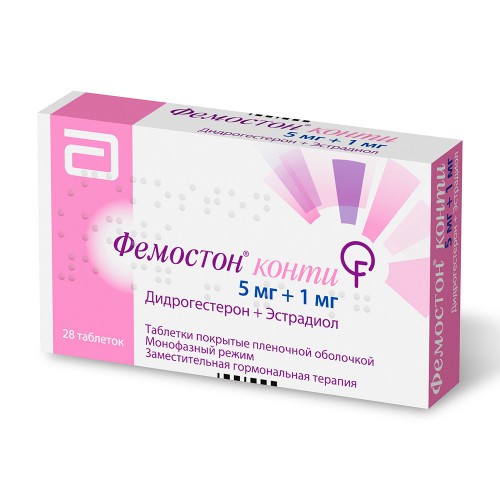
Film-coated tablets, 2.5 mg + 0.5 mg - 28 pcs with instructions for use in a pack
Dosage form
Round, biconvex, yellow film-coated tablets debossed with "379" on one side. Cross-sectional view: white, rough surface.
Compound
Active ingredients: dydrogesterone - 2.5 mg, estradiol hemihydrate - 0.517 mg (in terms of estradiol - 0.5 mg).
Excipients: lactose monohydrate - 117.4 mg; hypromellose (HPMC 2910) - 2.8 mg; corn starch - 14.7 mg; colloidal silicon dioxide - 1.4 mg; magnesium stearate - 0.7 mg.
Film coating: film coating YELLOW 1* (macrogol 3350 - 20.2%, polyvinyl alcohol - 40.0%, talc - 14.8%, titanium dioxide (E 171) - 20.55%, iron oxide yellow dye (E 172) - 4.45%) - 4.0 mg.
* A ready-made film coating of identical composition can be used, for example, Opadry®II yellow 85F32331
Pharmacotherapeutic group
combined anti-climacteric agent (estrogen + gestagen)
Pharmacodynamics
Estradiol
Estradiol hemihydrate, which is part of the drug Femoston® mini, when dissolved is converted into 17-β-estradiol, identical to endogenous human estradiol, which is the most active estrogen.
Estradiol replenishes estrogen deficiency in the body of postmenopausal women and reduces the severity of menopausal symptoms.
Dydrogesterone
Dydrogesterone is a progestogen that is effective when taken orally and has activity similar to parenterally administered progesterone.
Since estrogens promote endometrial proliferation, estrogen-only hormone replacement therapy (HRT) increases the risk of endometrial hyperplasia and cancer. The addition of dydrogesterone significantly reduces the estrogen-induced increased risk of endometrial hyperplasia in women with an intact uterus.
Information obtained during clinical studies:
Effect on the severity of menopausal symptoms:
Femoston® Mini reduced menopausal symptoms within the first weeks of treatment: a statistically significant reduction in the frequency of moderate and severe hot flashes compared to placebo, beginning at week 4 of therapy. The frequency of moderate and severe hot flashes subsequently decreased until discontinuation of therapy at week 13.
Effect on the severity of symptoms associated with estrogen deficiency and the nature of bleeding:
Clinical trials have shown that Femoston® mini reduces symptoms associated with estrogen deficiency and bleeding patterns. In two studies, amenorrhea (absence of bleeding or spotting) was observed in 91% and 88% of women, respectively, within 10-12 months of treatment. Irregular bleeding or spotting occurred in 10% and 21% of women, respectively, within the first three months of treatment and in 9% and 12% within 10-12 months of treatment.
Pharmacokinetics
Estradiol
Suction
The absorption of estradiol depends on particle size; micronized estradiol is readily absorbed from the gastrointestinal tract.
The table below presents the pharmacokinetic parameters of estradiol (E2), estrone (E1), and estrone sulfate (E1S) for each dose of micronized estradiol. Data are presented as mean (SD).
Estradiol 0.5 mg
E2 E1 Parameters E1S Parameters
Cmax (pg/ml) 34.8 (30.4) 182(110)
Cmax (ng/ml) 6.98 (3.32)
Cmin (pg/ml) - - - -
Cav (pg/ml) 21.5 (16.0) - - -
AUC0-t (pg.h/ml) 516 (383) 2959 (2135) AUC0-t (ng.h/ml) -
Distribution
Estradiol (like other estrogens) can be found in both bound and free forms. Approximately 98-99% of an estradiol dose is bound to plasma proteins, of which 30-52% is bound to albumin and approximately 46-69% to sex hormone-binding globulin (SHBG).
Metabolism
After oral administration, estradiol is extensively metabolized. The main unconjugated and conjugated metabolites are estrone and estrone sulfate, which possess estrogenic activity, either directly or after conversion to estradiol. Estrone sulfate may undergo enterohepatic recirculation.
Withdrawal
Estrone and estradiol are excreted in a glucuronic acid-conjugated form by the kidneys. The half-life (T1/2) is 10-16 hours. Estrogens are excreted in breast milk.
Time- and dose-dependent estradiol concentrations
With daily administration of Femoston® Mini, plasma estradiol concentrations reach a steady state after approximately 5 days. This level is typically reached within 8-11 days of initiation of therapy.
Dydrogesterone
Suction
Dydrogesterone is rapidly absorbed after oral administration. The time to peak concentration (Tmax) for dydrogesterone ranges from 30 minutes to 2.5 hours. The absolute bioavailability of dydrogesterone is 28%.
The table below presents the pharmacokinetic parameters of dydrogesterone (D) and 20α-dihydrodydrogesterone (DHD). Data are presented as mean (SD).
Dydrogesterone 2.5 mg
D DHD Parameters
Cmax (ng/ml) 0.759 (0.313) 18.9 (7.22)
Cmin (ng/ml) 0.0309 (0.0209) -
Cav (ng/ml) 0.117(0.0455) -
AUC0-t (ng h/ml) 2.81 (1.09) 90.4 (44.1)
Distribution
More than 90% of dydrogesterone and 20α-dihydrodydrogesterone (DHD) are bound to plasma proteins.
Metabolism
After oral administration, dydrogesterone is rapidly metabolized to DHD. Peak plasma concentrations of DHD are reached approximately 1.5 hours after administration. DHD plasma concentrations significantly exceed the initial dydrogesterone concentration; the ratios of the area under the concentration-time curve (AUC) and maximum concentration (Cmax) of DHD to dydrogesterone are approximately 40 and 25, respectively. The half-life for dydrogesterone is 5-7 hours, and for DHD, 14-17 hours.
A common characteristic feature of all dydrogesterone metabolites is the preservation of the 4,6-dien-3-one configuration of the original substance and the absence of 17a-hydroxylation, which results in the absence of estrogenic and androgenic activity.
Withdrawal
Dydrogesterone is completely eliminated within 72 hours. On average, 63% of the administered dose is excreted via the kidneys. Total plasma clearance is 6.4 L/min. Dydrogesterone is detected in urine primarily as a glucuronic acid conjugate.
Time- and dose-dependence of dydrogesterone concentration
Comparison of the kinetics of single and multiple doses (from 2.5 to 10 mg) shows that the pharmacokinetic properties of dydrogesterone and DHD do not change when taking multiple doses.
Steady-state concentrations of dydrogesterone were reached 3 days after initiation of treatment.
Indications
Hormone replacement therapy for disorders caused by estrogen deficiency in postmenopausal women (not earlier than 12 months after the last menstruation).
Contraindications
- Hypersensitivity to dydrogesterone, estradiol and/or any of the excipients in the preparation.
- Diagnosed or suspected breast cancer.
- Diagnosed or suspected estrogen-dependent malignant neoplasms (eg, endometrial cancer).
- Diagnosed or suspected progestogen-dependent neoplasms (eg, meningioma).
- Vaginal bleeding of unknown etiology.
- Untreated endometrial hyperplasia.
- Thrombosis (arterial and venous) and thromboembolism currently or in history (including thrombosis, deep vein thrombosis; pulmonary embolism, myocardial infarction, ischemic or hemorrhagic cerebrovascular accidents).
- Acute or chronic liver diseases currently or in history (until normalization of liver function tests), including malignant liver tumors.
- Porphyry.
- Multiple or severe factors of arterial or venous thrombosis, angina pectoris, prolonged immobilization, severe forms of obesity (body mass index over 30 kg/m2), diseases of the cerebral vessels or coronary arteries, transient ischemic attacks, complicated lesions of the valvular apparatus of the heart, atrial fibrillation.
- Known hereditary or acquired predisposition to arterial or venous thrombosis/thromboembolism, such as hyperhomocysteinemia, antithrombin III deficiency, protein C deficiency, protein S deficiency, presence of antiphospholipid antibodies (anticardiolipin antibodies, lupus anticoagulant).
- Pregnancy and breastfeeding period.
- Galactose intolerance, lactase deficiency, glucose-galactose malabsorption syndrome.
- Meningioma.
- The use of Femoston® mini should be stopped immediately if contraindications are identified and/or if the following conditions occur:
- jaundice and/or liver dysfunction;
- uncontrolled arterial hypertension;
- migraine-like headache that first appeared against the background of the use of drugs for HRT;
- pregnancy.
With caution:
The use of drugs for HRT, including Femoston® mini, requires precautions in the presence of any of the following diseases/conditions and risk factors:
- Uterine leiomyoma, endometriosis.
- The presence of risk factors for the development of estrogen-dependent tumors (for example, second-degree relatives with breast cancer).
- Arterial hypertension.
- Benign liver tumors.
- Diabetes mellitus, both with and without vascular complications.
- Cholelithiasis.
- Migraine or severe headache.
- Systemic lupus erythematosus.
- History of endometrial hyperplasia.
- Epilepsy.
- Bronchial asthma.
- Otosclerosis.
It should be taken into account that these diseases/conditions and risk factors may recur or worsen during therapy with Femoston® mini. Precautions should be taken in the following cases:
- in patients with chronic heart and kidney failure;
- in female patients with risk factors for the development of thrombosis and thromboembolism in the family history (thrombosis or thromboembolic complications in first-degree relatives under 50 years of age (such patients should be screened, with prior notification that screening can only detect some thrombophilic disorders);
- in patients receiving anticoagulant therapy, it is necessary to carefully evaluate the benefit-risk ratio of using Femoston® mini.
Pregnancy and lactation:
The use of Femoston® mini during pregnancy and breastfeeding is contraindicated.
If pregnancy occurs while taking the drug, you should immediately stop using it.
The results of most epidemiological studies analyzing data on the unintentional use of estrogen-progestogen combinations by pregnant women indicate the absence of teratogenic or fetotoxic effects. Available data on the use of estradiol/dydrogesterone by pregnant women are limited.
The drug Femoston® mini is not used in women of reproductive age.
Method of administration and dosage
The drug is taken orally daily for 28 days, continuously, 1 tablet per day (preferably at the same time of day), regardless of food intake.
When switching from another continuous, sequential, or cyclical regimen, complete the current cycle and then switch to Femoston® Mini. Women not taking HRT or switching from a continuous, combination HRT regimen can start Femoston® Mini on any day.
If a woman misses a pill, she should take it within 12 hours of her usual time. Otherwise, skip the missed pill and take the next day's pill at her usual time. Missing a pill may increase the risk of breakthrough bleeding or spotting.
To initiate and continue HRT treatment for disorders caused by estrogen deficiency, the combination of dydrogesterone and estradiol should be used at the lowest effective dose and for the shortest duration (see "Special Instructions"). Continuous combination therapy may be initiated with Femoston® mini, depending on the time since menopause and the severity of estrogen deficiency symptoms.
Women with natural menopause should not begin taking the combined HRT drug Femoston® Mini until at least 12 months after their last menstrual period. Women whose menopause is due to surgery can begin taking the drug immediately (as directed by a doctor if symptoms persist).
Use in special clinical groups of patients
Children and adolescents under 18 years of age
There are no indications for the use of the drug Femoston® mini in children.
Elderly female patients
There is no experience with the use of the drug in women over 65 years of age.
Impaired renal function
Estrogens can cause fluid retention in the body, so patients with impaired renal function should be under medical supervision.
Impaired liver function
Acute or chronic liver disease, currently or in history (until normalization of liver function test parameters), is a contraindication to the use of the drug.
Side effects
In clinical studies, the most common adverse reactions observed in patients receiving estradiol + dydrogesterone combination therapy were headache, abdominal pain, breast tenderness/tension, and back pain.
In clinical studies (n=4929), the following adverse reactions were observed with the following frequencies (number of cases reported/number of patients):
System organ Very common ≥1/10 Common ≥1/100 to <1/10 Uncommon ≥1/1,000 to <1/100 Rare ≥1/10,000 to 1/1,000
Infectious and parasitic diseases
Vaginal candidiasis
Cystitis
Benign, malignant and unspecified neoplasms
Increase in the size of myoma
Blood and lymphatic system disorders
Hemolytic anemia*
Immune system disorders
Hypersensitivity to the active and excipients of the drug
Mental disorders
Depression, nervousness
Changes in libido
Nervous system disorders
Headache
Migraine, dizziness
Meningioma*
Visual disturbances
Increased corneal curvature*, contact lens intolerance*
Cardiac disorders
Myocardial infarction
Vascular disorders
Venous thromboembolism*, arterial hypertension, peripheral vascular disease, varicose veins
Stroke*
Gastrointestinal disorders
Abdominal pain
Nausea, vomiting, flatulence
Dyspepsia
Liver and biliary tract disorders
Impaired liver function (sometimes combined with jaundice, asthenia or malaise and abdominal pain), gallbladder disease
Skin and subcutaneous tissue disorders
Skin allergic reactions (including skin rash, hives, itching)
Angioedema, erythema nodosum*, vascular purpura; chloasma or melasma, which may persist after discontinuation of the drug*
Musculoskeletal and connective tissue disorders
Back pain
Muscle cramps in the lower extremities*
Disorders of the genital organs and mammary glands
Breast tenderness/tenderness
Menstrual irregularities (including postmenopausal spotting, metrorrhagia, menorrhagia, oligo-/amenorrhea, irregular menstruation, dysmenorrhea), lower abdominal pain, changes in vaginal secretions
Enlargement of the mammary glands, premenstrual syndrome
General disorders and administration site conditions
Asthenic conditions (weakness, malaise, fatigue), peripheral edema
Laboratory and instrumental data
Weight gain
Weight loss
* Adverse effects reported spontaneously but not observed in clinical studies
Other adverse reactions associated with the use of estrogen-progestogen combinations (including estradiol + idrogesterone):
- Benign, malignant, and unspecified neoplasms: estrogen-dependent benign and malignant neoplasms, including endometrial cancer and ovarian cancer. Increased meningioma size.
- Immune system disorders: systemic lupus erythematosus.
- Metabolism and nutrition disorders: hypertriglyceridemia.
- Nervous system disorders: risk of developing dementia, chorea, and provoking epileptic seizures.
- Vascular disorders: arterial thromboembolism.
- Gastrointestinal disorders: pancreatitis (in patients with hypertriglyceridemia).
- Skin and subcutaneous tissue disorders: erythema multiforme.
- Renal and urinary tract disorders: urinary incontinence.
- Disorders of the genital organs and mammary glands: fibrocystic mastopathy, cervical erosion.
- Congenital and hereditary disorders: worsening of the course of concomitant porphyria.
- Laboratory and instrumental data: increased concentration of thyroid hormones in blood plasma.
Overdose
Estradiol and dydrogesterone are substances with low toxicity.
Symptoms
In case of overdose, symptoms such as nausea, vomiting, breast tenderness, dizziness, abdominal pain, drowsiness/weakness, and withdrawal bleeding may develop.
Treatment
Symptomatic.
The information above also applies in cases of unintentional overdose in children due to accidental ingestion of the drug.
Drug interactions
No studies have been conducted to investigate interactions with other drugs.
The effectiveness of Femoston® mini may be reduced in the following cases:
- The metabolism of estrogen and progestogen may be enhanced when taken simultaneously with drugs that induce liver microsomal enzymes of the cytochrome P450 system (isoenzymes CYP2B6, 3A4, 3A5, 3A7): anticonvulsants (phenobarbital, carbamazepine, phenytoin) and antimicrobial drugs (rifampicin, rifabutin, nevirapine, efavirenz).
- Ritonavir and nelfinavir, although known as strong inhibitors of CYP3A4, A5, A7 isoenzymes, when used concomitantly with sex hormones, can enhance their metabolism.
- Herbal preparations containing St. John's wort (Hypericum perforatum) may enhance the metabolism of estrogen and progestogen via the CYP3A4 isoenzyme.
- Increased metabolism of estrogen and progestogen may be clinically manifested by a decrease in the effect of the drug and the appearance of bloody discharge from the vagina.
Estrogens may affect the metabolism of other drugs:
Estrogens can influence the metabolism of other drugs by competitively binding to cytochrome P450 (CYP) isoenzymes. This should be taken into account for drugs with a narrow therapeutic window, such as tacrolimus and cyclosporine A (CYP3A4, 3A3), fentanyl (CYP3A4), and theophylline (CYP1A2), as this interaction may lead to increased plasma concentrations of these drugs reaching toxic levels. Therefore, careful monitoring of long-term drug administration may be necessary, and possibly a dose reduction for tacrolimus, fentanyl, cyclosporine A, and theophylline may be necessary.
Special instructions
The drug is prescribed only if symptoms adversely affect quality of life are present. Therapy should be continued as long as the benefit outweighs the risk of adverse reactions.
Experience with the use of the drug in women over 65 years of age is limited.
Data on the risks associated with HRT in premature menopause are limited. Because of the low absolute risk in younger women, the benefit-to-risk ratio may be more favorable for them than for older women.
Medical examination
Before prescribing or resuming therapy with Femoston® mini, a complete medical and family history should be obtained and a general and gynecological examination (including a mammary gland examination) should be performed to identify possible contraindications and conditions requiring precautions. During treatment with Femoston® mini, periodic examinations are recommended. The frequency and nature of these examinations are determined individually, but at least once every 6 months. It is advisable to perform instrumental examinations (e.g., mammography) for additional breast examination. Women should be informed of possible changes in their breasts, which should be reported to their physician.
The use of estrogens may affect the results of the following laboratory tests: glucose tolerance test, thyroid function test, and liver function test.
Endometrial hyperplasia and cancer
In women with an intact uterus, the risk of developing endometrial hyperplasia and cancer increases with long-term estrogen monotherapy. The risk of endometrial cancer in patients using estrogen alone depends on the dose and duration of treatment and increases from 2 to 12 times compared to patients not receiving therapy; the risk may remain elevated for 10 years after stopping therapy.
In women with a uterus, the use of estrogen-only HRT is not recommended due to the increased risk of endometrial cancer. Cyclic use of a progestogen (at least for 12 days of a 28-day cycle) or continuous use of combined HRT in women with a uterus can prevent the increased risk of endometrial hyperplasia and cancer associated with estrogen.
For the purpose of timely diagnosis, it is advisable to conduct ultrasound screening and, if necessary, conduct a histological (cytological) examination.
Bloody vaginal discharge
During the first months of treatment, breakthrough bleeding and/or light vaginal discharge may occur. If such bleeding occurs some time after starting therapy or continues after stopping treatment, the cause should be determined. An endometrial biopsy may be performed to rule out malignancy.
Venous thromboembolism
HRT is associated with a 1.3- to 3-fold increased risk of developing venous thromboembolism (VTE), i.e., deep vein thrombosis or pulmonary embolism. This occurrence is most likely during the first year of HRT.
If there is a family history of thrombosis/thromboembolism in first-degree relatives under 50 years of age, as well as a history of habitual miscarriage, a hemostasis study must be performed (screening only reveals some of the disorders of the blood coagulation system).
If the patient is taking anticoagulants, the benefit-risk ratio of Femoston® mini should be carefully assessed. Femoston® mini should not be prescribed until a thorough assessment of potential thromboembolism risk factors has been completed or anticoagulant therapy has been initiated.
If a thrombophilic condition is detected in a family member and/or if the defect is severe or severe (e.g. antithrombin III deficiency, protein S or C deficiency, or a combination of defects), Femoston® mini is contraindicated.
Since patients with diagnosed thrombophilic conditions have an increased risk of developing venous thromboembolism, the use of Femoston® mini, which increases this risk, is contraindicated.
In most cases, risk factors for VTE include: estrogen use, older age, major surgery, prolonged immobilization, obesity (body mass index > 30 kg/m2), pregnancy or the postpartum period, systemic lupus erythematosus, and cancer. There is no consensus on the possible role of varicose veins in the development of VTE.
To prevent VTE after surgery, preventive measures should be considered in all postoperative patients.
To prevent VTE in cases of prolonged immobilization following surgery, major surgery, lower extremity surgery, pelvic surgery, neurosurgery, or extensive trauma, the drug is discontinued and resumed only after the woman regains full mobility. In cases of elective surgery, the drug is discontinued 4-6 weeks prior to the procedure.
If VTE develops after starting therapy, the drug should be discontinued and patients should be informed that they should contact their physician immediately if any possible symptoms of thrombosis/thromboembolism occur (e.g., pain or swelling of the lower extremities, sudden chest pain, shortness of breath).
Breast cancer
Current data indicate an increased risk of breast cancer in women taking combined (estrogen + progestogen) HRT, and possibly also estrogen-only HRT. The risk depends on the duration of HRT use.
HRT with combined (estrogen + progestogen) drugs
A randomized, placebo-controlled trial (the Women's Health Initiative (WHI)) and epidemiological studies have shown an increased risk of breast cancer in women taking combined (estrogen + progestogen) HRT. The increase is noticeable after approximately three years of therapy.
Estrogen therapy
The WHI study found no increased risk of breast cancer in women with a prior hysterectomy who used estrogen-only HRT. Most observational studies have shown a slight increase in the risk of breast cancer, but this risk was significantly lower than in women using combined (estrogen-progestogen) HRT.
The increased risk becomes noticeable after several years of using HRT drugs, but after stopping therapy it returns to the baseline level within a few (maximum five) years.
Against the background of HRT, especially HRT with combined (estrogen + progestogen) drugs, an increase in the density of breast tissue is observed during mammography, which can complicate the diagnosis of breast cancer.
Ovarian cancer
Ovarian cancer is significantly less common than breast cancer. Epidemiological data obtained from a large meta-analysis indicate a slightly increased risk of ovarian cancer in women taking HRT, both combination and estrogen-only. Studies have shown that the risk of ovarian cancer increases with therapy duration of more than five years and gradually decreases after discontinuation.
Results from a number of other studies, including the WHI, suggest that combined HRT is associated with a similar or slightly lower risk of ovarian cancer.
Risk of ischemic stroke
Combined estrogen-progestogen therapy or estrogen-only therapy is associated with a 1.5-fold increased relative risk of ischemic stroke. The risk of hemorrhagic stroke is not increased with HRT use. The relative risk is independent of age or time of menopause, but the baseline risk is highly age-dependent, so the overall risk of stroke in women using HRT will increase with age.
Coronary heart disease (CHD)
Randomised controlled clinical trials have found no evidence of a protective effect of HRT against myocardial infarction in women with or without coronary heart disease who received combined (estrogen+progestogen) HRT or estrogen alone.
HRT with combined (estrogen + progestogen) drugs
The relative risk of coronary heart disease (CHD) increases slightly with combined estrogen-progestogen HRT use. Because the absolute risk of CHD varies greatly with age, the number of additional cases of CHD associated with combined estrogen-progestogen HRT use in healthy premenopausal women is very small; however, it increases with age.
The risk is slightly higher in women over 60 years of age.
Other conditions
Estrogens can cause fluid retention, which may adversely affect patients with impaired renal and cardiac function. These patients should be under medical supervision.
In women with hypertriglyceridemia, taking HRT drugs may in very rare cases lead to a significant increase in plasma triglyceride concentrations, which may contribute to the development of pancreatitis.
Estrogens increase thyroxine-binding globulin levels, leading to an overall increase in circulating thyroid hormone levels, as measured by plasma protein-bound iodine, thyroxine (T4) concentrations (chromatographic or radioimmunoassay), or triiodothyronine (T3) concentrations (radioimmunoassay). A triiodothyronine uptake assay (TTA) reveals elevated thyroxine-binding globulin levels. Free T4 and T3 levels remain unchanged. Plasma concentrations of other binding proteins (e.g., transcortin, sex hormone-binding globulin) may also increase, leading to increased circulating glucocorticosteroid and sex hormone levels.
Concentrations of free or biologically active hormones remain unchanged. Concentrations of other plasma proteins (renin-angiotensin system, α-1-antitrypsin, ceruloplasmin) may increase.
HRT does not improve cognitive function. There are reports of an increased risk of dementia in women who started HRT (combined or estrogen-only) after age 65.
The drug Femoston® mini is not a contraceptive.
Impact on the ability to drive vehicles and operate machinery:
The drug does not have a significant effect on the ability to drive vehicles and operate machinery.
Storage temperature
from 2℃ to 25℃