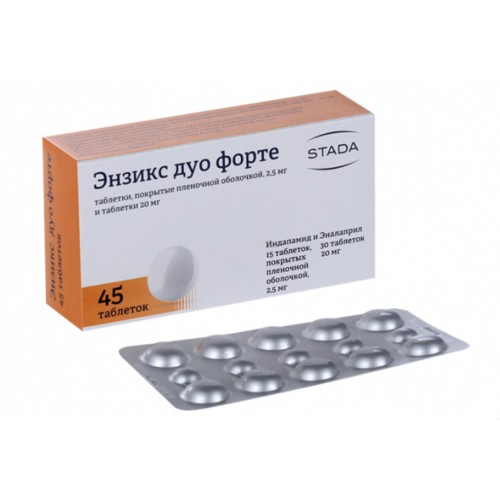
Expiration date: 12/2027
Compound
A set of two types of tablets:
1 larger tablet contains:
active ingredient: enalapril maleate 20 mg,
excipients: lactose monohydrate, magnesium carbonate, gelatin, crospovidone, magnesium stearate,
1 smaller film-coated tablet contains:
active ingredient: indapamide 2.5 mg,
excipients: lactose monohydrate, povidone K30, crospovidone, magnesium stearate, sodium lauryl sulfate, talc, hypromellose, macrogol 6000, titanium dioxide
Indications for use
Arterial hypertension.
Contraindications
- Hypersensitivity to the components of the drug Enzix,
- pregnancy,
- lactation period,
- childhood and adolescence up to 18 years of age
Enalapril:
history of angioedema associated with treatment with ACE inhibitors, renal insufficiency (creatinine Cl >30 ml/min),
Indapamide: anuria, hypokalemia, severe liver failure (including with encephalopathy), severe renal failure, concomitant use of drugs that prolong the QT interval.
Use during pregnancy and breastfeeding
The drug is contraindicated for use during pregnancy and lactation. If Enzix must be used during lactation, breastfeeding should be discontinued.
Neonates and infants exposed to ACE inhibitors in utero should be closely monitored for significant hypotension, oliguria, hyperkalemia, and neurological disorders, which may develop due to decreased renal and cerebral blood flow associated with the ACE inhibitor-induced decrease in blood pressure. In cases of oliguria, blood pressure and renal perfusion should be maintained with appropriate fluids and vasoconstrictors.
Side effects
Enalapril
From the central nervous system and peripheral nervous system: headache, dizziness, weakness, insomnia, anxiety, confusion, fatigue, drowsiness (2-3%), in some cases when used in high doses - nervousness, depression, paresthesia.
From the respiratory system: non-productive dry cough, interstitial pneumonitis, bronchospasm/bronchial asthma, shortness of breath, rhinorrhea, pharyngitis.
From the sensory organs: vestibular disorders, hearing and vision impairment, tinnitus.
From the digestive system: dry mouth, anorexia, dyspeptic symptoms (nausea, diarrhea or constipation, vomiting, abdominal pain), intestinal obstruction, pancreatitis, impaired liver function and bile secretion, hepatitis (hepatocellular or cholestatic), jaundice, increased activity of liver transaminases, hyperbilirubinemia.
From the cardiovascular system: excessive decrease in blood pressure, orthostatic collapse, rarely - chest pain, angina pectoris, myocardial infarction (usually associated with a significant decrease in blood pressure), arrhythmia (atrial brady- or tachycardia, atrial fibrillation), palpitations, thromboembolism of the pulmonary artery branches, pain in the heart area, fainting.
From the metabolic side: hyperkalemia, hyponatremia, hypoglycemia (in patients with diabetes mellitus).
From the hematopoietic system: rarely - decreased hematocrit and hemoglobin concentration, thrombocytopenia, neutropenia, agranulocytosis (in patients with autoimmune diseases), eosinophilia, increased ESR.
From the urinary system: impaired renal function, proteinuria, hypercreatininemia, increased urea levels.
From the reproductive system: decreased libido, hot flashes, decreased potency.
Dermatological reactions: alopecia, photosensitivity.
Allergic reactions: skin rash, angioedema of the face, extremities, lips, tongue, glottis and/or larynx, dysphonia, erythema multiforme, exfoliative dermatitis, Stevens-Johnson syndrome, toxic epidermal necrolysis, pemphigus, itching, urticaria, serositis, vasculitis, myositis, arthralgia, arthritis, stomatitis, glossitis, very rare - intestinal angioedema.
Indapamide
From the central nervous system and peripheral nervous system: asthenia, nervousness, headache, dizziness, drowsiness, vertigo, insomnia, depression, paresthesia, rarely - increased fatigue, general weakness, malaise, muscle spasm, tension, irritability, anxiety.
From the digestive system: nausea, anorexia, dry mouth, gastralgia, vomiting, diarrhea or constipation, discomfort in the abdomen, pancreatitis are possible.
From the sensory organs: conjunctivitis, visual impairment.
From the respiratory system: cough, pharyngitis, sinusitis, rhinorrhea, rarely - rhinitis.
From the cardiovascular system: orthostatic hypotension, ECG changes characteristic of hypokalemia, arrhythmia, palpitations.
From the urinary system: increased frequency of infections, nocturia, polyuria, increased blood urea nitrogen, hypercreatininemia.
Metabolic disorders: hypokalemia, hyponatremia, hypochloremic alkalosis, hypercalcemia, glucosuria, sweating, weight loss.
From the reproductive system: decreased potency, decreased libido.
Allergic reactions: skin rash, urticaria, itching, hemorrhagic vasculitis.
Others: flu-like syndrome, chest pain, back pain, infections, exacerbation of SLE.
Interaction
Enalapril
The simultaneous use of enalapril and indapamide leads to an increase in the antihypertensive effect of enalapril.
When enalapril is used concomitantly with NSAIDs, including selective COX-2 inhibitors, and analgesic-antipyretics, the hypotensive effect of enalapril may be reduced.
In some cases, in patients with impaired renal function receiving NSAIDs, including selective COX-2 inhibitors, the use of ACE inhibitors may lead to further deterioration of renal function. These changes are reversible.
The antihypertensive effect of enalapril is enhanced by diuretics, beta-blockers, methyldopa, nitrates, dihydropyridine calcium channel blockers, hydralazine, and prazosin.
The use of enalapril in combination with potassium-sparing diuretics (spironolactone, triamterene, amiloride), as well as with potassium-containing drugs, increases the risk of hyperkalemia.
Enalapril weakens the effect of drugs containing theophylline.
Immunosuppressants, allopurinol, and cytostatics enhance the hematotoxicity of enalapril. Drugs that cause bone marrow suppression increase the risk of neutropenia and/or agranulocytosis.
Enalapril helps to slow down the excretion of lithium (when enalapril is used simultaneously with lithium salts, monitoring of the lithium concentration in the blood plasma is recommended).
Concomitant use of ACE inhibitors and hypoglycemic agents (insulin, oral hypoglycemic agents) may enhance the hypoglycemic effect of the latter, increasing the risk of hypoglycemia. This is most common during the first 3 weeks of concomitant use, as well as in patients with renal impairment. In patients with diabetes mellitus receiving oral hypoglycemic agents and insulin, blood glucose monitoring is necessary, especially during the first month of concomitant use with ACE inhibitors.
A symptom complex including facial flushing, nausea, vomiting and arterial hypotension has been described in rare cases with the combined use of parenteral gold preparations (sodium aurothiomalate) and ACE inhibitors (enalapril).
Ethanol enhances the hypotensive effect of enalapril.
Indapamide
When indapamide is used simultaneously with saluretics, cardiac glycosides, gluco- and mineralocorticoids, tetracosactide, amphotericin B (intravenously), and laxatives, the risk of hypokalemia increases.
When indapamide is taken simultaneously with cardiac glycosides, the risk of developing glycoside intoxication increases; with calcium preparations, hypercalcemia; with metformin, lactic acidosis may worsen.
Indapamide helps to slow down the excretion of lithium and thereby increase its concentration in the blood plasma.
Astemizole, erythromycin (intravenously), pentamidine, sultopride, terfenadine, vincamine, class IA (quinidine, disopyramide) and class III (amiodarone, bretylium, sotalol) antiarrhythmic drugs when taken with idapamide may lead to the development of torsades de pointes arrhythmia.
NSAIDs, GCS, tetracosactide, sympathomimetics reduce the hypotensive effect of indapamide, baclofen enhances it.
The combination of indapamide with potassium-sparing diuretics may be effective in some patients, but the possibility of developing hypo- or hyperkalemia cannot be completely ruled out, especially in patients with diabetes mellitus and renal failure.
ACE inhibitors, when used concomitantly with indapamide, increase the risk of developing arterial hypotension and/or acute renal failure (especially in the presence of renal artery stenosis).
Indapamide increases the risk of renal impairment when used concomitantly with high-dose iodinated contrast media (dehydration). Fluid loss should be replenished in patients taking indapamide before using iodinated contrast media.
Tricyclic antidepressants and antipsychotic drugs enhance the hypotensive effect of indapamide and increase the risk of developing orthostatic hypotension.
When indapamide is used concomitantly with cyclosporine, the risk of developing hypercreatininemia increases.
Indapamide reduces the effect of indirect anticoagulants (coumarin or indandione derivatives) due to an increase in the concentration of coagulation factors as a result of a decrease in the circulating blood volume and an increase in their production by the liver (dose adjustment may be required).
Indapamide enhances the effect of non-depolarizing muscle relaxants.
Method of administration and dosage
Take one tablet of enalapril (20 mg) and one film-coated tablet of indapamide (2.5 mg) orally, simultaneously in the morning. Depending on blood pressure changes, the enalapril dose may be increased to twice daily.
The maximum daily dose of enalapril is 40 mg, indapamide 2.5 mg.
In chronic renal failure, enalapril accumulation occurs when filtration rate decreases to less than 10 ml/min. With a creatinine clearance of 3080 ml/min, the enalapril dose should be 510 mg/day.
Overdose
Indapamide
Symptoms: nausea, vomiting, weakness, gastrointestinal dysfunction, fluid and electrolyte imbalances, and in some cases, excessive hypotension, dizziness, drowsiness, confusion, and respiratory depression. In patients with liver cirrhosis, hepatic coma may develop.
Treatment: gastric lavage and/or activated charcoal, correction of water and electrolyte balance, symptomatic therapy. There is no specific antidote.
Special instructions
Enalapril
Patients require medical supervision for 2 hours after taking the initial dose of the drug and an additional 1 hour until blood pressure stabilizes.
In patients with a decrease in circulating blood volume (as a result of diuretic therapy, limiting the consumption of table salt, hemodialysis, diarrhea, vomiting), when using enalapril (as with other ACE inhibitors), even at the initial dose, the risk of a sudden and significant decrease in blood pressure increases.
Transient hypertension is not a contraindication for continuing treatment with the drug after blood pressure has stabilized. If a significant drop in blood pressure recurs, the dose should be reduced or the drug discontinued.
The use of high-strength dialysis membranes increases the risk of anaphylactic reactions. On non-dialysis days, the dosage regimen should be adjusted based on blood pressure levels.
Patients with severe heart failure, coronary artery disease, and cerebrovascular disease should be closely monitored. In these patients, a sudden drop in blood pressure can lead to myocardial infarction, stroke, or renal impairment.
Abrupt discontinuation of the drug does not result in a sharp increase in blood pressure.
Enalapril should be discontinued before testing parathyroid function.
If side effects or angioedema develop, the drug should be discontinued and appropriate treatment prescribed.
Before surgery (including dentistry), the patient should inform the surgeon/anesthesiologist about the use of ACE inhibitors.
Before and during treatment with ACE inhibitors, periodic monitoring of blood pressure, blood parameters (hemoglobin, potassium, creatinine, urea, liver transaminase activity), and protein in the urine is necessary.
Indapamide
When prescribing indapamide to patients taking cardiac glycosides, laxatives, against the background of hyperaldosteronism, as well as to elderly patients, regular monitoring of potassium and creatinine levels is indicated.
While taking indapamide, plasma potassium, sodium, and magnesium levels, pH, glucose, uric acid, and residual nitrogen should be regularly monitored. Particularly careful monitoring is indicated in patients with liver cirrhosis (especially with edema or ascites, which increases the risk of metabolic alkalosis, which can worsen hepatic encephalopathy), coronary heart disease, heart failure, and in elderly patients. Patients with a prolonged QT interval on an ECG (either congenital or secondary to a pathological process) are also at increased risk. The first blood potassium measurement should be performed within the first week of treatment.
Hypercalcemia during indapamide treatment may be a consequence of previously undiagnosed hyperparathyroidism.
In patients with diabetes, it is extremely important to control blood glucose levels, especially in the presence of hypokalemia.
Severe dehydration can lead to acute renal failure (decreased glomerular filtration rate). Patients must receive fluid replacement therapy and closely monitor renal function at the beginning of treatment.
Indapamide may cause a positive result in a doping test.
Patients with arterial hypertension and hyponatremia (due to taking diuretics) must stop taking diuretics 3 days before starting to take ACE inhibitors (if necessary, taking a diuretic can be resumed a little later), or in such cases, initial low doses of ACE inhibitors are prescribed.
When prescribing indapamide, it should be taken into account that sulfonamide derivatives can exacerbate the course of SLE.
Use in pediatrics
The efficacy and safety of enalapril and indapamide in children and adolescents under 18 years of age have not been established.
Impact on the ability to drive vehicles and operate machinery
At the beginning of treatment, until the end of the dose selection period, the patient should refrain from driving vehicles and engaging in potentially hazardous activities that require increased concentration and quick psychomotor reactions, as dizziness is possible, especially after taking the initial dose of the drug.
Enalapril
Symptoms: a marked decrease in blood pressure leading to collapse, myocardial infarction, acute cerebrovascular accident or thromboembolic complications, convulsions, stupor.
Treatment: The patient is placed in a horizontal position with the head of the bed low. In mild cases, gastric lavage and oral saline laxatives are indicated. In more severe cases, measures aimed at stabilizing blood pressure are taken: intravenous saline, plasma substitutes, angiotensin II, and possibly hemodialysis.
Storage conditions
In a dry place, at a temperature of 15-25 C
Best before date
3 years