Expiration date: 06/2028
Composition
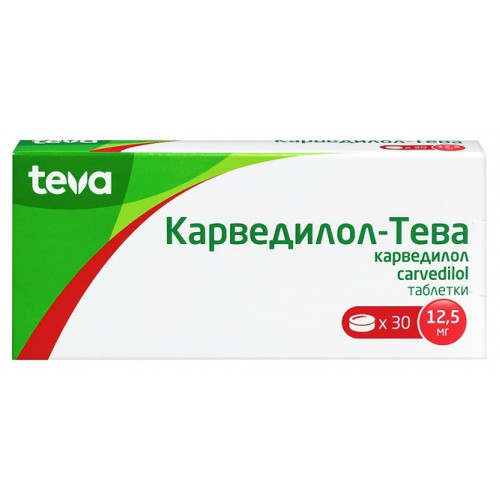
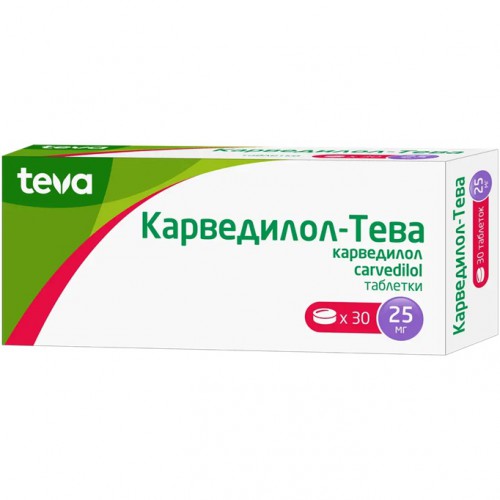
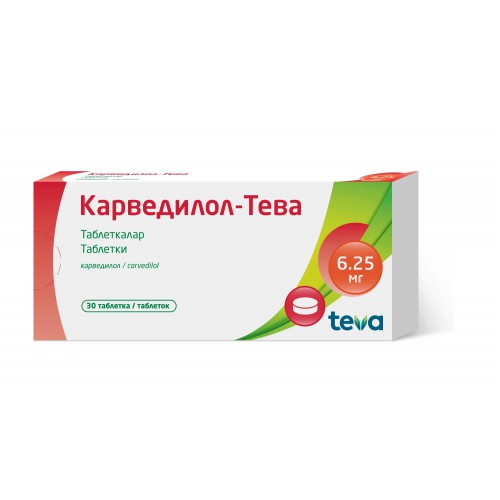
1 tablet contains carvedilol 6.25, 12.50 or 25 mg
Pharmacokinetics
Carvedilol has vasodilatory, antianginal, and antiarrhythmic effects. It blocks alpha1-, beta1-, and beta2-adrenergic receptors. It has no intrinsic sympathomimetic activity and possesses membrane-stabilizing properties. Carvedilol has an antioxidant effect, scavenging free oxygen radicals.
Indications for use
Arterial hypertension (monotherapy or in combination with other antihypertensive drugs), stable angina.
Contraindications
Hypersensitivity, chronic obstructive pulmonary disease, severe liver failure, severe bradycardia, sick sinus syndrome, grade II and III atrioventricular block (except for patients with a pacemaker), decompensated heart failure, pulmonary hypertension or cardiogenic shock, arterial hypotension, pregnancy, breastfeeding, age under 18 years (safety and efficacy in individuals under 18 years of age have not been established).
Side effects
At recommended doses, Carvedilol is well tolerated, but in some cases side effects are possible.
From the digestive system: nausea, dry mouth, abdominal pain, diarrhea or constipation, vomiting, increased activity of liver transaminases.
From the nervous system: headache, dizziness, feeling of fatigue, loss of consciousness, muscle weakness (usually at the beginning of treatment), sleep disturbance, depression, paresthesia.
From the sensory organs: decreased lacrimation.
From the genitourinary system: impaired renal function, edema, impaired urination.
From the hematopoietic organs: leukopenia, thrombocytopenia.
Allergic reactions: urticaria, itching, rash, appearance and/or exacerbation of psoriasis, sneezing, nasal congestion, bronchospasm, shortness of breath (in predisposed patients), very rarely anaphylactoid reaction.
From the cardiovascular system: bradycardia, orthostatic hypotension, angina pectoris, atrioventricular block, progression of circulatory failure (cold extremities), progression of heart failure, exacerbation of intermittent claudication syndrome, Raynaud's syndrome.
Endocrine disorders: weight gain.
Others: pain in the limbs, flu-like symptoms.
As with the use of other drugs that block alpha-adrenergic receptors, latent diabetes mellitus may manifest or its symptoms may worsen.
Interaction
Catecholamine-depleting agents (reserpine, MAO inhibitors) may cause severe bradycardia and hypotension. Concomitant administration of carvedilol with ACE inhibitors, thiazide diuretics, and vasodilators may lead to a sharp drop in blood pressure. It enhances the effects of insulin and sulfonylureas (simultaneously masking or attenuating the severity of hypoglycemic symptoms by reducing the breakdown of liver glycogen to glucose). When coadministered with insulin or oral hypoglycemic agents, blood glucose levels should be monitored. CYP2D6 inhibitors (quinidine, fluoxetine, propafenone) may increase the concentration of the R(+)-enantiomer of carvedilol. Concomitant use with antiarrhythmic agents (especially class I) and calcium channel blockers (verapamil, diltiazem) may cause severe hypotension and heart failure. Intravenous administration of these drugs with carvedilol is contraindicated. It increases digoxin concentrations, requiring monitoring, as concomitant administration with cardiac glycosides may lead to atrioventricular block. General anesthetics enhance the negative inotropic and hypotensive effects. Phenobarbital and rifampicin accelerate metabolism and decrease plasma concentrations of carvedilol. Microsomal oxidation inhibitors (cimetidine), diuretics, and ACE inhibitors increase concentrations and enhance the hypotensive effect of carvedilol. Carvedilol inhibits the metabolism of cyclosporine.
Overdose
Symptoms: marked decrease in blood pressure (systolic blood pressure 80 mmHg and below), marked bradycardia (less than 50 beats/min), impaired respiratory function (bronchospasm, etc.), chronic circulatory failure, cardiogenic shock, cardiac arrest.
Treatment: induce vomiting and perform gastric lavage within the first two hours. Overdose requires intensive treatment, monitoring of vital functions is necessary. The patient should be in a position with legs elevated, i.e. in the Trendelenburg position. Beta-blocking antidotes are orciprenaline or isoprenaline 0.51 mg IV and/or glucagon at a dose of 15 mg (maximum dose 10 mg). Severe hypotension is treated with parenteral fluid administration and repeated administration of adrenaline at a dose of 510 mg (or its IV infusion at a rate of 5 mcg/min). In case of excessive bradycardia, atropine at a dose of 0.52 mg IV is prescribed. To maintain cardiac activity: glucagon is administered intravenously rapidly (within 30 s), followed by a constant infusion at a rate of 25 mg/h. If peripheral vasodilatory effects predominate (warm extremities, in addition to significant arterial hypotension), norepinephrine should be administered at 510 mcg intravenously as an infusion of 5 mcg/min. To relieve bronchospasm, beta-adrenergic agonists (as an aerosol or intravenously) or intravenous aminophylline are prescribed. If seizures develop, slow administration of diazepam or clonazepam is recommended. In severe cases of intoxication, when shock symptoms predominate, treatment should be continued until the patient's condition stabilizes, taking into account the half-life of carvedilol, which is 610 hours.
Special instructions
If the heart rate drops to 55 bpm, the drug should be discontinued. In individuals with allergies or undergoing desensitization, carvedilol may increase allergy sensitivity. Contact lens wearers should be warned that the drug reduces lacrimation. When completing a course of treatment with Carvedilol Sandoz and clonidine, the clonidine dosage should be gradually reduced first, followed by discontinuation of clonidine and then carvedilol. If Carvedilol Sandoz must be used during lactation, breastfeeding should be discontinued. Alcohol consumption should be avoided during treatment. If circulatory failure progresses during treatment, it is recommended to increase the diuretic dose. In case of renal failure, the dose should be adjusted based on renal function. If surgery under general anesthesia is required, the anesthesiologist should be informed of prior carvedilol therapy. It should be taken into account that the drug may mask the symptoms of thyrotoxicosis and hypoglycemia, so it is recommended to regularly monitor blood glucose levels and adjust the dose if necessary.
Storage conditions
At a temperature not exceeding 25 C