Expiration date: 12/2028
Release form
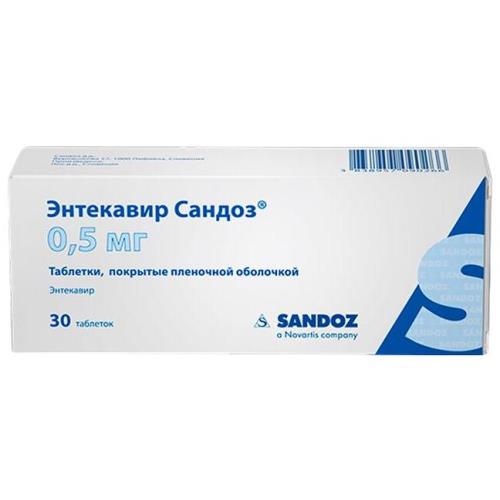
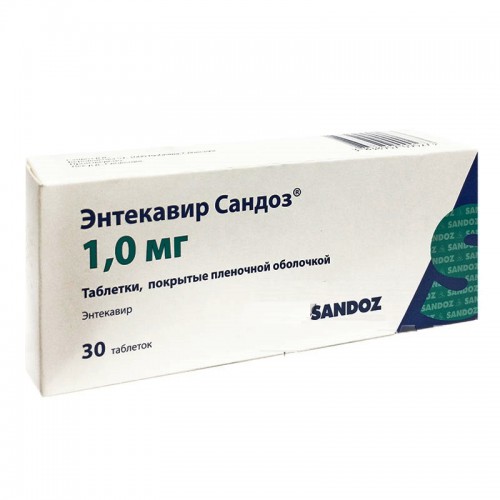
Film-coated tablets 0.5mg, 1mg - 30 pcs per pack.
Dosage form
White, round, biconvex film-coated tablets, engraved with "SZ" on one side and "108" on the other side.
Compound
1 tablet 0.5 mg contains:
Active ingredient: entecavir monohydrate - 0.5325 mg (equivalent to 0.5 mg entecavir*);
Excipients: lactose monohydrate** - 120.4675 mg (120.5 mg), microcrystalline cellulose - 69.0 mg, crospovidone - 8.0 mg, magnesium stearate - 2.0 mg; tablet shell composition: hypromellose 2910 - 6.485 mg, macrogol 6000 - 1.6 mg, titanium dioxide - 1.44 mg, talc - 0.475 mg.
*Theoretical value. The actual amount of entecavir used depends on the actual active substance analysis (as is approximately 93 to 94%) and is adjusted by the lactose monohydrate content.
**Theoretical value. The actual amount of lactose monohydrate used depends on the actual amount of active ingredient used.
Pharmacotherapeutic group
antiviral agent
Pharmacodynamics
Entecavir is a guanosine nucleoside analogue with potent and selective activity against HBV polymerase. Entecavir is phosphorylated to form the active triphosphate (TP), which has an intracellular half-life of 15 hours. The intracellular concentration of TP is directly related to the extracellular level of entecavir, and no significant accumulation of the drug is observed after the initial plateau level. By competing with the natural substrate (deoxyguanosine TP), entecavir TP inhibits all three types of functional activity of the viral polymerase: (1) priming of HBV polymerase, (2) reverse transcription of the negative-strand DNA from pregenomic mRNA, and (3) synthesis of the positive-strand HBV DNA. Entecavir TP is a weak inhibitor of cellular DNA polymerases α, β, and β with Kj values of 18-40 μM. In addition, at high concentrations of entecavir-TF and entecavir, no side effects were observed in relation to β-polymerase and DNA synthesis in the mitochondria of HepG2 cells.
Pharmacokinetics
Absorption. In healthy subjects, entecavir is rapidly absorbed, reaching its maximum plasma concentration (Cmax) within 0.5–1.5 hours. With repeated administration of entecavir at doses of 0.1–1 mg, a dose-proportional increase in Cmax and the area under the concentration-time curve (AUC) is observed. Steady-state is achieved after 6–10 days of once-daily oral administration, with plasma concentrations increasing approximately twofold. Cmax and minimum plasma concentration (Cmin) at steady-state were 4.2 ng/mL and 0.3 ng/mL, respectively, after administration of 0.5 mg; and 8.2 ng/mL and 0.5 ng/mL, respectively, after administration of 1 mg of entecavir. When 0.5 mg entecavir was administered orally with a high-fat or low-fat meal, there was a minimal delay in absorption (1-1.5 hours with food and 0.75 hours with fasting), a 44-46% decrease in Cmax and an 18-20% decrease in AUC.
Distribution. The estimated volume of distribution of entecavir exceeded total body fluid volume, indicating good tissue penetration. Entecavir binds approximately 13% to human serum proteins in vitro.
Metabolism and elimination. Entecavir is not a substrate, inhibitor, or inducer of CYP450 isoenzymes. Following administration of 4C-labeled entecavir to humans and rats, no oxidized or acetylated metabolites were detected, and phase II metabolites (glucuronides and sulfates) were detected in small amounts. After reaching Cmax, entecavir plasma concentrations declined biexponentially, with a half-life of 128-149 hours. With once-daily dosing, concentrations (accumulation) of the drug doubled, indicating an effective half-life of approximately 24 hours.
Entecavir is primarily eliminated by the kidneys, with 62-73% of the dose recovered unchanged in urine at steady state. Renal clearance is dose-independent and ranges from 360-471 mL/min, indicating glomerular filtration and tubular secretion.
Indications
Chronic hepatitis B in adults:
- with compensated liver damage and the presence of viral replication, increased levels of serum transaminase activity (alanine aminotransferase (ALT) or aspartate aminotransferase (AST)) and histological confirmation of signs of inflammation and/or liver fibrosis;
- with decompensated liver damage.
Contraindications
- Hypersensitivity to entecavir or any other component of the drug;
- lactose intolerance, lactase deficiency or glucose-galactose malabsorption;
- children under 18 years of age;
- breastfeeding period.
Use during pregnancy and breastfeeding
Pregnancy
Adequate and well-controlled studies in pregnant women have not been conducted. Entecavir Sandozk may be used during pregnancy only if the potential benefit to the mother outweighs the potential risk to the fetus.
There are no data on the effect of entecavir on maternal-to-neuter transmission of HBV. Therefore, appropriate measures should be taken to prevent neonatal HBV infection.
Breastfeeding period
Entecavir is excreted in rat milk. There are no data on the excretion of entecavir into breast milk. A risk to the infant cannot be excluded. Breastfeeding should be discontinued during treatment with entecavir.
Fertility
Animal studies have not revealed any effect of entecavir on fertility. Because the potential risk to a developing fetus is unknown, women of childbearing potential should use effective contraception during treatment with entecavir.
Method of administration and dosage
Entecavir should be taken orally on an empty stomach (that is, at least 2 hours after a meal and no later than 2 hours before the next meal).
The recommended dose of entecavir for patients with compensated liver disease is 0.5 mg once daily.
For lamivudine-resistant patients (i.e., patients with a history of hepatitis B virus viremia that persists during lamivudine therapy or patients with confirmed lamivudine resistance), the recommended dose is 1 mg entecavir once daily.
For patients with decompensated liver disease, the recommended dose is 1 mg of entecavir once daily.
Patients with renal failure
In patients with hepatic impairment, no dose adjustment of entecavir is required.
No dose adjustment of entecavir is required in elderly patients.
Side effects
In patients with compensated liver disease in clinical trials, the most common adverse reactions that were at least possibly related to entecavir treatment were headache (9%), fatigue (6%), dizziness (4%), and nausea (3%). Exacerbation of hepatitis during and after discontinuation of entecavir therapy was also observed (see Description of selected adverse reactions).
The adverse reaction assessment is based on post-marketing surveillance and four clinical studies in which 1,720 patients with chronic hepatitis B and compensated liver disease were treated with entecavir (n=862) or lamivudine (n=858) in a double-blind fashion for up to 107 weeks. In these studies, safety profiles, including laboratory abnormalities, were comparable with entecavir 0.5 mg daily (679 nucleoside-naive HBeAg-positive or HBeAg-negative patients treated for a median of 53 weeks), entecavir 1 mg daily (183 lamivudine-resistant patients treated for a median of 69 weeks), and lamivudine.
According to the World Health Organization (WHO), adverse events are classified according to their frequency of occurrence as follows: very common (>1/10), common (>1/100 to <1/10), uncommon (>1/1000 to <1/100), rare (>1/10000 to <1/1000), very rare (<1/10000); frequency unknown - it was not possible to establish the frequency of occurrence based on the available data.
Immune system disorders rare: anaphylactoid reactions.
Psychiatric disorders often: insomnia.
Nervous system disorders are common: headache, dizziness, drowsiness.
Gastrointestinal disorders: common: vomiting, diarrhea, nausea, dyspepsia.
Liver and biliary tract disorders: common: increased activity of liver transaminases.
Skin and subcutaneous tissue disorders uncommon: rash, alopecia.
General disorders and administration site conditions Common: fatigue.
Cases of lactic acidosis have been reported, often in association with decompensated liver function, other serious illnesses, or the use of other drugs (see section "Special warnings and precautions for use").
Treatment for more than 48 weeks: No new significant safety signals were identified during long-term treatment with entecavir for a median duration of 96 weeks.
Description of selected adverse reactions
Laboratory abnormalities: In clinical studies of nucleoside-naive patients, 5% of patients had an ALT increase greater than 3-fold from baseline and <1% had an ALT increase greater than 2-fold from baseline, along with a total bilirubin increase greater than 2 times the upper limit of normal (ULN) and greater than 2-fold from baseline. Albumin <2.5 g/dL was observed in <1% of patients, amylase greater than 3-fold from baseline in 2% of patients, lipase greater than 3-fold from baseline in 11% of patients, and platelet count <50,000/mm3 in <1% of patients.
In clinical studies of lamivudine-resistant patients, 4% of patients experienced an increase in ALT greater than 3-fold from baseline, and <1% experienced an increase in ALT greater than 2-fold from baseline, along with an increase in total bilirubin concentration greater than 2 times the ULN and greater than 2-fold from baseline. Amylase greater than 3-fold from baseline was observed in 2% of patients, lipase greater than 3-fold from baseline was observed in 18% of patients, and platelet counts greater than 50,000/mm3 were observed in <1% of patients.
Treatment-related flares: In studies of nucleoside-naive patients, on-treatment ALT increases >10 ULN and >2-fold from baseline occurred in 2% of entecavir-treated patients compared with 4% of lamivudine-treated patients. In studies of lamivudine-naive patients, on-treatment ALT increases >10 ULN and >2-fold from baseline occurred in 2% of entecavir-treated patients compared with 11% of lamivudine-treated patients. Among entecavir-treated patients, the median time to on-treatment ALT increase was 4-5 weeks. Overall, ALT decreased with continued treatment and was generally associated with a viral load decline of >2 logio/mL that preceded or coincided with the ALT increase. During treatment, periodic monitoring of liver function is recommended.
Exacerbations after treatment discontinuation: Exacerbations of hepatitis have been reported in patients who discontinued hepatitis B therapy, including entecavir. In studies of nucleoside-naive patients, ALT elevations >10 ULN and >2 times the reference value (baseline trough or last post-treatment measurement) during post-treatment follow-up occurred in 6% of entecavir-treated patients and 10% of lamivudine-treated patients. Among nucleoside-naive entecavir-treated patients, the median time to ALT elevation was 23–24 weeks, with 86% (24/28) of ALT elevations occurring in HBeAg-negative patients. In studies in lamivudine-resistant patients (with only a limited number of patients followed), 11% of entecavir-treated patients (and no lamivudine-treated patients) experienced ALT elevations during post-treatment follow-up.
In clinical trials, entecavir treatment was discontinued if patients achieved a prespecified response. If therapy was discontinued without regard to response, the incidence of post-treatment ALT elevations may have been higher.
Overdose
Data on entecavir overdose in patients are limited. In healthy volunteers receiving doses up to 20 mg/day for up to 14 days and single doses up to 40 mg, no unexpected adverse reactions were observed.
If overdose occurs, the patient should be monitored for signs of toxicity and given standard supportive care as needed.
Drug interactions
Since entecavir is eliminated primarily by the kidneys, concomitant administration of entecavir and drugs that reduce renal function or compete for renal tubular secretion may result in increased serum concentrations of entecavir or these drugs. No significant pharmacokinetic interactions with lamivudine, adefovir, or tenofovir have been identified.
Interactions between entecavir and other drugs eliminated by the kidneys or affecting renal function have not been studied. Close medical supervision is recommended when co-administering entecavir with such drugs.
Special instructions
Exacerbation of hepatitis
Spontaneous exacerbations of chronic hepatitis B occur relatively frequently and are characterized by transient increases in serum ALT activity. After initial antiviral therapy, some patients may experience increases in serum ALT activity, while HBV DNA levels decrease. Among patients treated with entecavir, the median time to exacerbation during treatment was 4-5 weeks. In patients with compensated liver disease, this increase in ALT activity was generally not accompanied by an increase in bilirubin concentrations or liver decompensation. Patients with cirrhosis may be at higher risk of liver decompensation after a hepatitis exacerbation and, therefore, should be closely monitored during treatment.
Hepatitis exacerbations have also been reported in patients who discontinued hepatitis B therapy. Post-treatment exacerbations are usually associated with increased HBV DNA levels, and most resolve spontaneously. However, severe exacerbations, including fatal ones, have been reported.
Among patients treated with entecavir and previously naive to nucleoside therapy, the median time to post-treatment relapse was 23–24 weeks, and most relapses were reported in HBeAg-negative patients. Liver function, clinical symptoms, and laboratory parameters should be monitored at regular intervals for at least 6 months after discontinuing hepatitis B therapy. Resumption of therapy may be necessary.
Patients with decompensated liver disease
Patients with decompensated liver disease (regardless of the cause), particularly Child-Pugh class C, had a higher incidence of serious liver-related adverse events compared with patients with compensated liver function. Furthermore, patients with decompensated liver disease may be at higher risk of developing lactic acidosis and certain renal adverse events, such as hepatorenal syndrome. Therefore, clinical and laboratory parameters should be closely monitored in these patients. Lactic acidosis and severe hepatomegaly with steatosis: Lactic acidosis (without hypoxemia), sometimes fatal, has been reported with the use of nucleoside analogues, usually associated with severe hepatomegaly and hepatic steatosis. Since entecavir is a nucleoside analogue, this risk cannot be excluded. Treatment with nucleoside analogues should be discontinued if there is a sharp increase in aminotransferase levels, the development of progressive hepatomegaly, or metabolic acidosis/lactic acidosis of unknown etiology. Benign gastrointestinal symptoms such as nausea, vomiting, and abdominal pain may indicate the development of lactic acidosis. Severe cases, sometimes fatal, have been associated with pancreatitis, liver failure/hepatic steatosis, renal failure, and increased serum lactate levels.
Caution should be exercised when prescribing nucleoside analogues to any patients (especially obese women) with hepatomegaly, hepatitis, or other known risk factors for liver disease. Close monitoring of such patients is necessary.
To differentiate between increases in aminotransferase activity due to a response to treatment and increases likely related to lactic acidosis, the physician should ensure that ALT changes are associated with improvements in other laboratory markers of chronic hepatitis B.
Patients who have undergone liver transplantation
The safety and efficacy of entecavir in liver transplant patients are unknown. Renal function should be closely monitored before and during treatment with entecavir in liver transplant patients receiving immunosuppressants that may affect renal function, such as cyclosporine and tacrolimus.
Patients with co-infection with hepatitis B/HIV
Entecavir has not been evaluated in patients with HBV/HIV coinfection not receiving concomitant effective treatment for HIV infection. There is a potential risk of developing drug-resistant HIV strains when entecavir is used to treat chronic hepatitis B in HIV-infected patients not receiving highly active antiretroviral therapy (HAART). Therefore, entecavir therapy should not be used in patients with HBV/HIV coinfection not receiving HAART. Entecavir has not been studied for the treatment of HIV infection and is not recommended for this indication.
Entecavir was studied in 68 adult patients with HBV/HIV coinfection receiving a lamivudine-containing HAART regimen. There are no data on the efficacy of entecavir in HBeAg-negative patients with HIV coinfection. There are limited data on the use of the drug in patients with HIV coinfection with low CD4 lymphocyte counts (<200 cells/mm3).
Patients with co-infections with hepatitis B/hepatitis C/hepatitis D There are no data on the efficacy of entecavir in patients with co-infection with hepatitis C or D virus.
Patients with impaired renal function
For patients with impaired renal function, dosage adjustment is recommended (see section "Dosage and Administration"). Virological response monitoring is necessary during treatment.
Lamivudine-resistant patients
Mutations in HBV polymerase that cause nucleotide substitutions associated with lamivudine resistance can lead to subsequent secondary substitutions, including entecavir resistance-associated substitutions (ETVr). A small proportion of lamivudine-resistant patients had ETVr substitutions at residues rtT 184, rtS202, or rtM250 at baseline. Patients with lamivudine-resistant HBV are at higher risk of developing subsequent entecavir resistance than patients without lamivudine resistance. The cumulative probability of new genotypic entecavir resistance after 1, 2, 3, 4, and 5 years of treatment in lamivudine resistance studies was 6%, 15%, 36%, 47%, and 51%, respectively. Virologic response in lamivudine-resistant patients should be frequently monitored and appropriate resistance testing should be performed.
In patients with a suboptimal virologic response after 24 weeks of entecavir treatment, a modification of the treatment regimen should be considered. At the initiation of therapy in patients with a history of documented lamivudine resistance, combination therapy with entecavir and a second antiviral agent (to which there is no cross-resistance with lamivudine or entecavir) should be considered as a preferred option compared to entecavir monotherapy.
Pre-existing lamivudine-resistant HBV is associated with an increased risk of subsequent entecavir resistance, regardless of the severity of liver disease; in patients with decompensated liver disease, virologic breakthrough may be associated with serious clinical complications of existing liver disease. General information for patients
Patients should be informed that entecavir therapy does not reduce the risk of hepatitis B transmission and appropriate precautions should be taken.
Impact on the ability to drive vehicles and operate machinery
No studies have been conducted on the effects of entecavir on the ability to drive or operate machinery. Dizziness, fatigue, and drowsiness are common side effects that may affect the ability to drive or operate machinery.
Storage temperature
from 2℃ to 30℃