
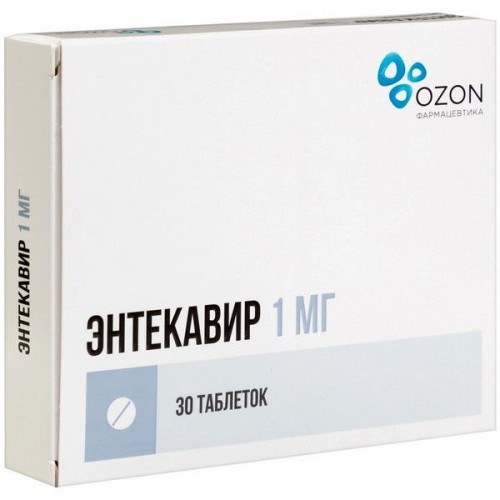
Expiration date: 02/2029
Method of administration and dosage
Always use Entecavir exactly as directed by your doctor. If you have any questions, consult your doctor.
The recommended dose is 0.5 mg or 1 mg orally once daily.
Your dose will depend on the following factors:
- Have you been treated for hepatitis B virus infection before and what medications did you receive?
- Do you have kidney problems? Your doctor may prescribe a lower dose or direct you to take it less often than once a day.
- The condition of your liver.
Always take the dose recommended by your doctor to ensure your medicine is fully effective and reduce viral resistance.
Take this medicine until your doctor tells you to stop.
Some patients should take entecavir on an empty stomach. If your doctor directs you to take entecavir on an empty stomach, this means at least 2 hours after eating and at least 2 hours before your next meal.
If you forget to take Entecavir
It's important not to miss any doses. If you miss a dose of Entecavir, take it as soon as possible and then take your next dose at your regular time. If it's almost time for your next dose, skip the missed dose. Wait until it's time for your next dose and take it at your regular time. Do not take a double dose to make up for a missed dose.
If you stop taking Entecavir
Do not stop taking entecavir until your doctor tells you to. If you have questions about how long to take this medication, talk to your doctor.
If you have any additional questions about the use of Entecavir, please contact your doctor.
Indications
Entecavir is used in adults over 18 years of age to treat chronic hepatitis B with:
- compensated liver damage and the presence of viral replication, increased levels of serum transaminase activity (alanine aminotransferase (ALT) or aspartate aminotransferase (AST)) and histological signs of inflammation in the liver and/or fibrosis;
- decompensated liver damage.
If there is no improvement or you feel worse, you should consult a doctor.
Compound
The active substance is entecavir.
Each tablet contains entecavir monohydrate equivalent to 1 mg entecavir.
The excipients are: lactose monohydrate, microcrystalline cellulose (MCC-102), crospovidone, povidone-K30, magnesium stearate.
Shell composition: hypromellose, macrogol-4000, titanium dioxide.
Contraindications
Do not take Entecavir if:
- you are allergic (hypersensitive) to entecavir or any other components of the drug (listed in section 6 of the package leaflet).
Children and teenagers
Do not give this medicine to children aged 0 to 18 years due to the risk of ineffectiveness and possible unsafety (the safety and effectiveness of Entecavir in children under 18 years of age have not been established).
Special instructions
Before taking Entecavir, consult your doctor.
- If you have ever had kidney problems, tell your doctor. This is important because entecavir is eliminated from the body through the kidneys, and your dose or dosing schedule may need to be adjusted.
- If you are infected with HIV (human immunodeficiency virus), be sure to tell your doctor. You should not take Entecavir to treat hepatitis B unless you are also taking HIV medications, as this may reduce the effectiveness of future HIV treatments.
- Entecavir belongs to a class of drugs that can cause lactic acidosis (excess lactic acid in the blood) and liver enlargement. Symptoms such as nausea, vomiting, and abdominal pain may indicate the development of lactic acidosis. This rare but serious side effect has sometimes been fatal. Lactic acidosis is more common in women, especially if they are overweight. Your doctor will monitor you regularly while you take entecavir.
- If you have previously been treated for chronic hepatitis B, tell your doctor.
- If you have impaired liver function, discuss with your doctor the possible effects of treatment with this medicine.
- Taking Entecavir will not prevent you from infecting other people with the hepatitis B virus, whether through blood or sexual contact. Therefore, it is important to take appropriate precautions to prevent infecting other people with the hepatitis B virus.
Entecavir contains lactose.
If you have an intolerance to some sugars, consult your doctor before taking this medicine.
Packaging and release form
Film-coated tablets, 1 mg - 30 pcs per pack, together with instructions for medical use (package insert) are placed in a cardboard package (pack).
Side effects
Like all medicines, this medicine can cause side effects, although not everybody gets them.
The following adverse reactions are possible when using this drug:
Common (may affect up to 1 in 10 people)
- Headache
- Insomnia
- Fatigue
- Dizziness
- Drowsiness
- Vomit
- Diarrhea
- Nausea
- Feeling pain or discomfort in the upper abdomen (dyspepsia)
- Increased levels of liver enzymes in the blood.
Uncommon (may affect up to 1 in 100 people)
- Rash
- Hair loss.
Rare (may affect up to 1 in 1,000 people)
- Wheezing, difficulty breathing, hives, rash, itching, swelling of the face, fainting - signs of an acute allergic reaction (anaphylactoid reaction).
Cases of lactic acidosis have been reported, often in association with hepatic decompensation, other serious illnesses, or the use of other drugs.
Reporting adverse reactions
If you experience any adverse reactions, consult your doctor.
This recommendation also applies to any adverse reactions not listed in the package leaflet. You can also report adverse reactions directly (see below). By reporting adverse reactions, you help provide more information about the safety of this medicine.
Pharmacotherapeutic group
systemic antiviral agents; direct-acting antiviral agents; nucleoside and nucleotide reverse transcriptase inhibitors
Interaction with other drugs
Tell your doctor if you are taking, have recently taken, or might take any other medications. It is especially important to inform your doctor about medications that reduce renal function or compete for renal tubular secretion, as this may increase serum concentrations of entecavir or these medications. No significant drug interactions have been observed with concomitant administration of entecavir with lamivudine, adefovir, or tenofovir.
Impact on the ability to drive a car and operate other machinery
Dizziness, fatigue, and drowsiness are common side effects that may impair your ability to drive or operate machinery. If you experience these symptoms, refrain from driving or operating machinery. If you have any concerns, consult your doctor.
Use during pregnancy and breastfeeding
If you are pregnant or breastfeeding, think you may be pregnant, or are planning a pregnancy, consult your doctor before using this medication.
Pregnancy
Entecavir has not been proven safe for use during pregnancy. Entecavir should not be used during pregnancy unless directed by a doctor. It is important that women of childbearing age receiving entecavir use effective contraception to avoid pregnancy.
Breast-feeding
It is unknown whether entecavir is excreted in breast milk. You should not breastfeed while taking entecavir. Tell your doctor if you are breastfeeding.
Pharmacodynamics
What is Entecavir and what is it used for?
The drug Entecavir belongs to antiviral drugs.
Hepatitis B virus infection causes liver damage. This medication reduces the amount of virus in the body and improves liver function. Entecavir can be used in patients with liver damage but normal liver function (compensated liver disease), as well as in patients whose liver is damaged and not functioning properly (decompensated liver disease).
Storage temperature
from 2℃ to 25℃
Overdose
If you take more Entecavir than you should
Contact your doctor immediately. If possible, bring the package with you to show your doctor which medication you've taken.